Written by:
CT Family First Movers
Published:
October 27, 2026
Learn how to pack a mirror for moving so it survives the truck ride intact, from framed wall mirrors to large floor mirrors and glass-top dressers.
Packing a mirror for moving comes down to four things: cardboard corner protectors on all four corners, an X of painter's tape across the glass face to control shattering if it does crack, a mirror or picture box sized to the actual piece (not a generic box with padding stuffed around the gaps), and transporting it upright on its edge, never flat. Skip the corner protectors or use an undersized box, and even a short ride across town can turn a bedroom mirror into a box of glass shards.
Mirrors are deceptively hard to move well. They're heavy for their size, the glass has zero flex, and most of the stress a mirror takes in a move lands on the corners and edges rather than the flat face. A little understanding of how mirrors actually fail in transit changes how you pack them.
You need cardboard corner protectors, painter's or masking tape, packing paper or moving blankets, plastic stretch wrap, and a mirror or picture box in a size close to your mirror's dimensions. Skip packing peanuts and loose newspaper; they shift during transit and don't actually brace a flat glass surface against pressure.
Mirror and picture boxes are sold in telescoping sets so you can adjust the length and width to fit your piece snugly. A box that's too large lets the mirror slide and absorb impact on its corners anyway, which defeats the purpose. If you can't find a mirror box in the right size, sandwiching the mirror between two pieces of cut cardboard and taping around the edges is a workable substitute for smaller pieces.
Taping a large X (or asterisk pattern for bigger mirrors) across the glass doesn't prevent breaks, but it holds the glass together if a crack does happen, which keeps shards from spraying loose inside the box or truck. It's a two-minute step that turns a dangerous mess into a contained one.
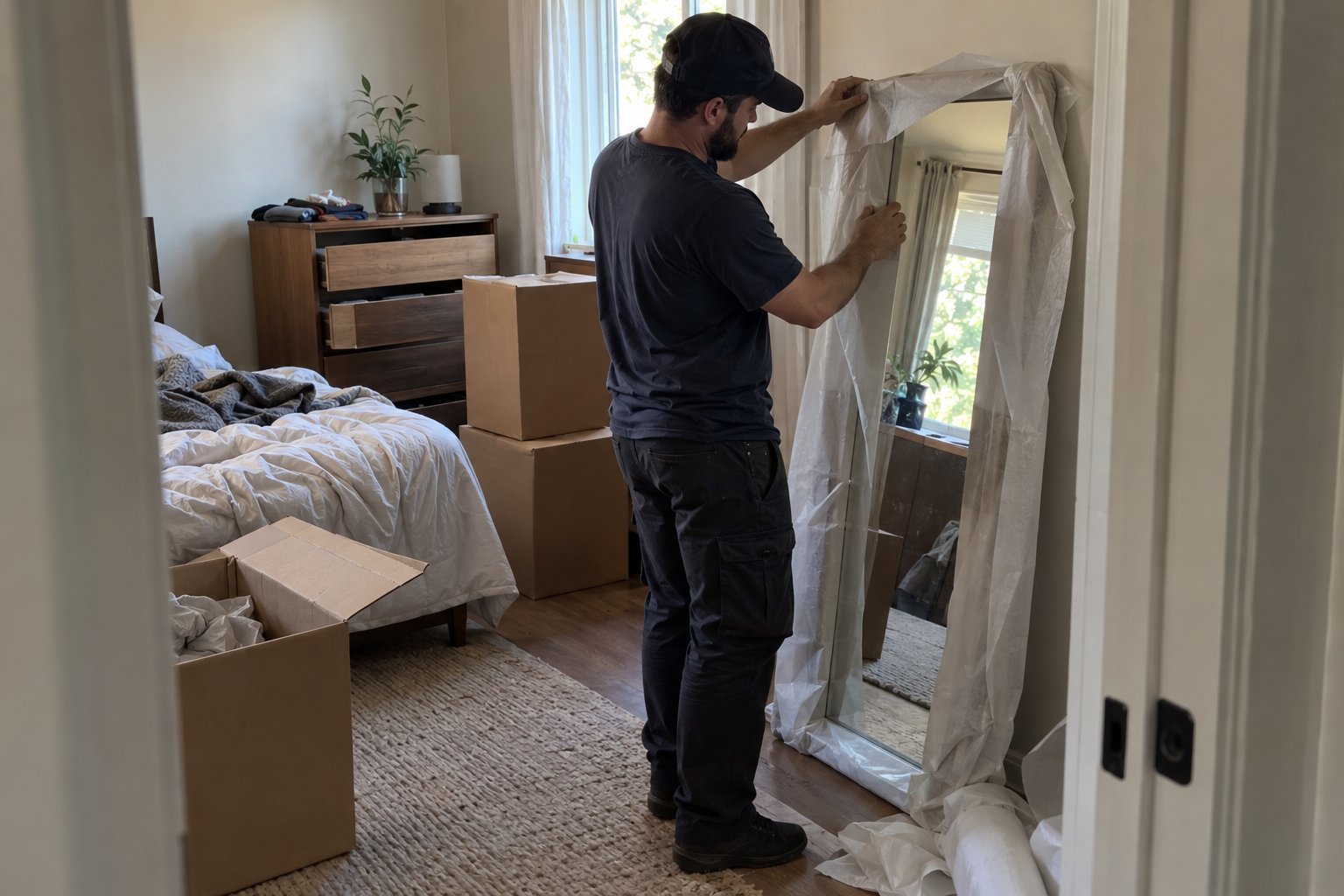
Corner protectors, either foam or cardboard, go on all four corners before anything else, since corners are where nearly all transit damage starts. From there, wrap the full mirror in packing paper or a moving blanket and secure it with stretch wrap rather than tape directly on the frame or glass.
If your mirror has a wood or metal frame, check that the frame itself is sound before you wrap it. A loose joint or wobbly backing board will keep flexing in transit and can eventually stress the glass from the inside of the frame. Tighten what you can before packing day.
Frameless or beveled-edge mirrors need extra edge padding since there's no wood or metal buffer absorbing bumps. Run a strip of cardboard or foam pipe insulation along each exposed edge and tape it in place before boxing.
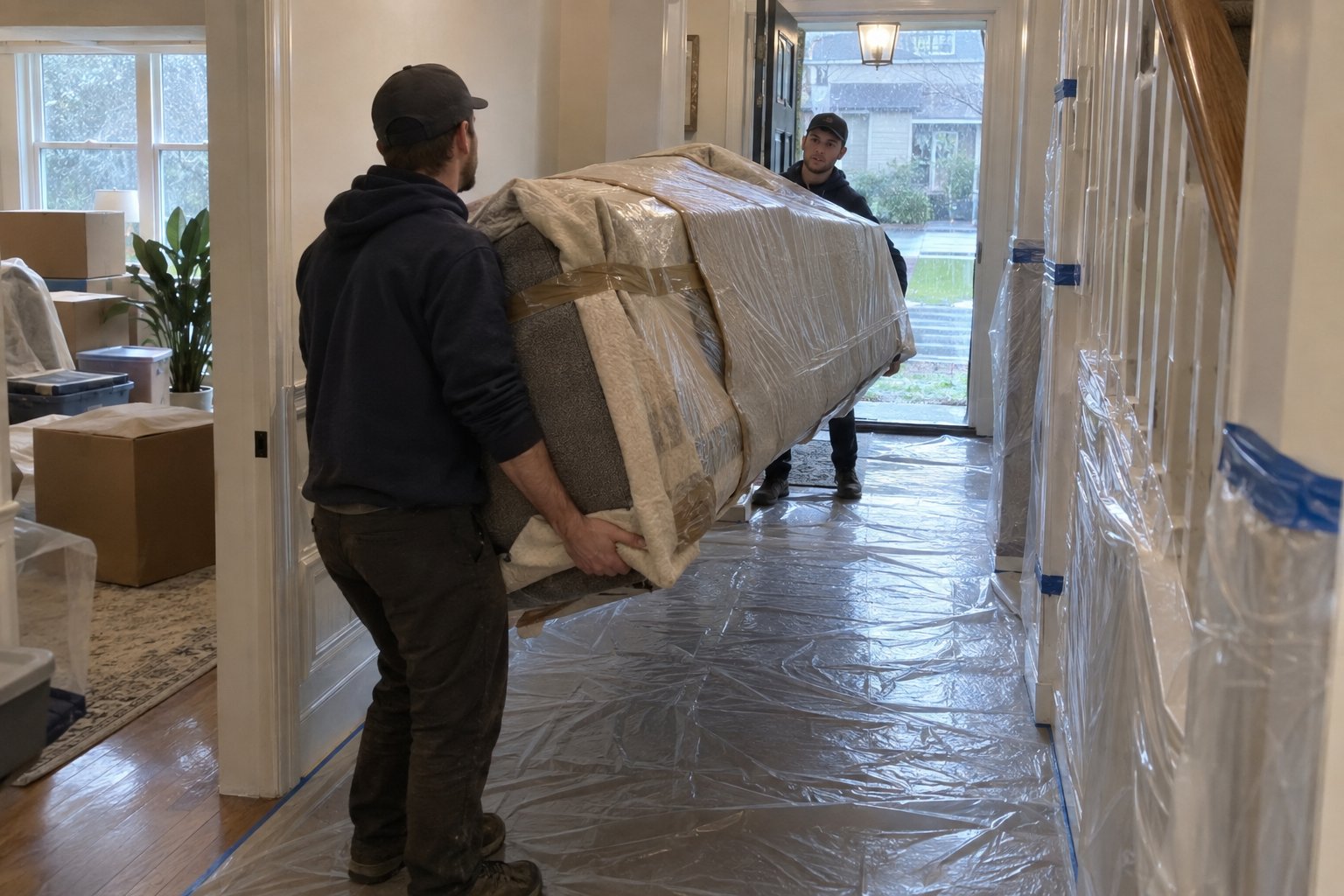
Large and full-length mirrors need a telescoping mirror box sized specifically for them, corner protectors, and a layer of moving blankets around the whole piece, secured with stretch wrap rather than tape on the glass. Because of their size and weight, these are also the mirrors most likely to need a second person just to lift and carry safely.
If a full-length mirror is too large for any standard mirror box, building a plywood "sandwich" is the sturdier option: cardboard or thin plywood on both faces, taped and strapped around the perimeter, with corner protectors underneath. This is more work but it's the right call for oversized statement pieces or antique mirrors where replacement isn't really an option.
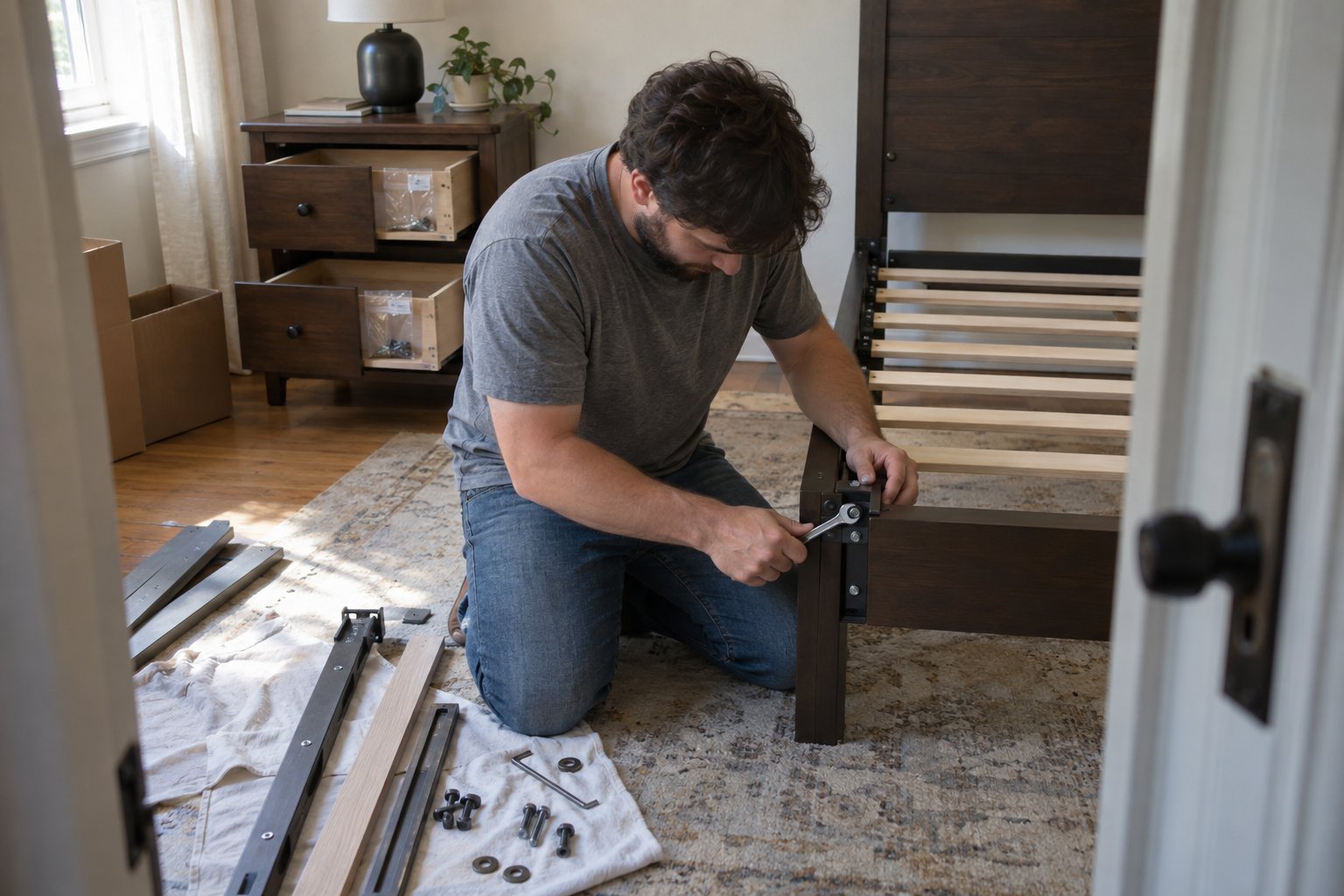
If your move includes furniture with mirrored or glass surfaces, such as a dresser with an attached mirror or a glass-top table, consider whether the glass should come off the frame entirely for transport. Many attached mirrors are held in with clips or a simple bracket, and separating them removes the risk of the glass cracking against the wood frame during loading. If you're also taking apart other furniture for the move, our guide to disassembling furniture before a move covers how to keep hardware organized so reassembly isn't a guessing game.
Mirrors should always travel on their edge, standing upright, never laid flat under other items. Flat storage puts the full weight of anything stacked on top directly onto the glass, which is exactly the pressure a mirror is worst at absorbing.
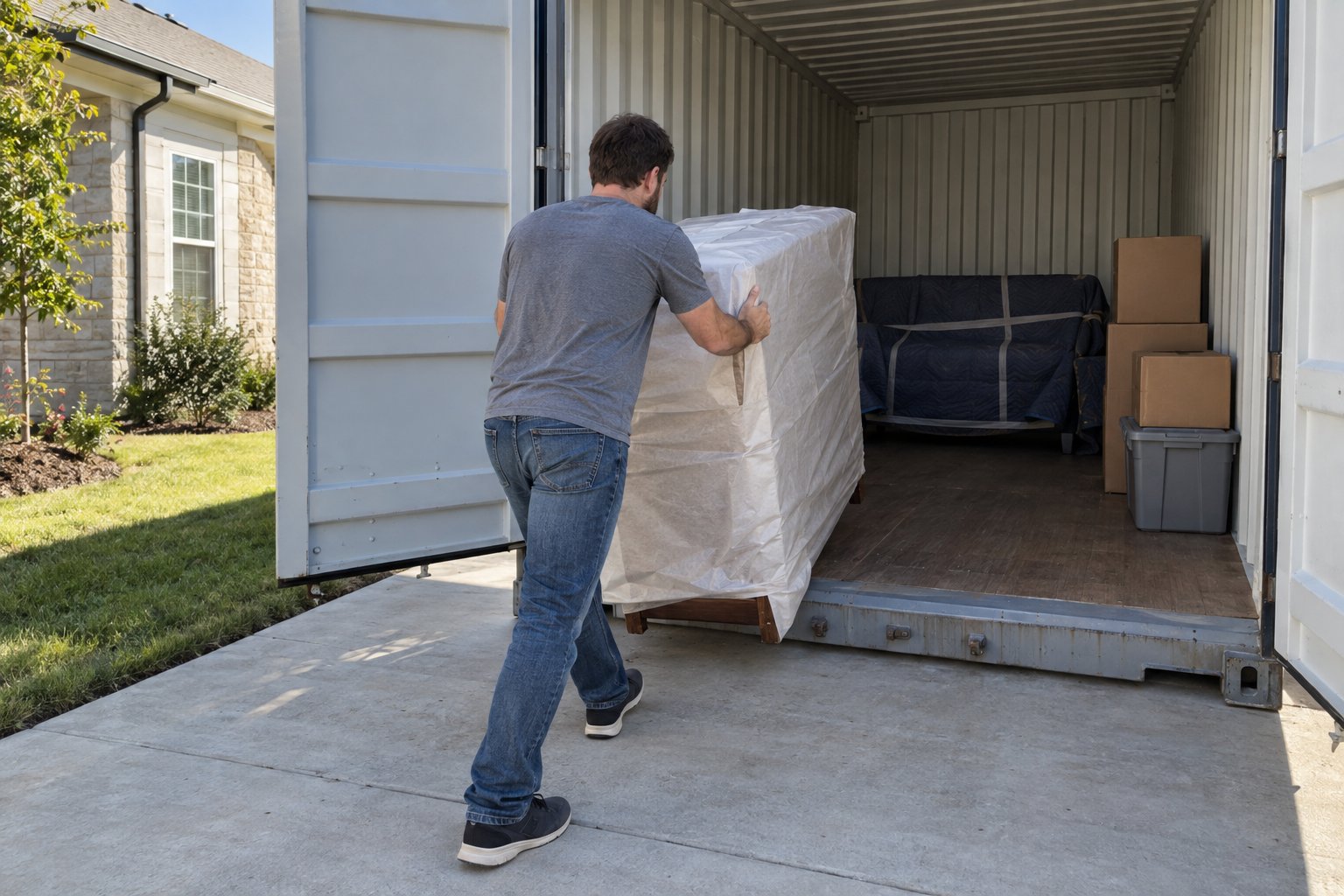
Load boxed mirrors against a flat wall of the truck, wedged between soft items like mattresses or cushions rather than hard furniture, and strap them in place so they can't tip or slide during the drive. Label the box "fragile" and "this side up" on every visible face, not just the top, since boxes get rotated and restacked more than you'd expect during loading.
If your mirror is part of a larger pile of breakables in the move, the padding and loading principles here apply across the board; our broader room-by-room packing guide for Connecticut families walks through how to sequence fragile-item packing alongside everything else in the house.
Professional movers bring mirror-specific boxes, proper corner protection, and experience loading glass items so they don't shift in transit, which lowers the risk of breakage compared to a rushed DIY pack job. If you have an antique, custom-framed, or especially large mirror, handing it off to pros is usually worth it.
That said, plenty of families pack their own mirrors successfully with the right materials and a little patience. If you'd rather not deal with sourcing mirror boxes and blankets yourself, our packing services cover fragile items like mirrors as part of a full pack, and our team can also help load mirrors carefully as part of a larger move with our local moving services.
Oversized, oddly shaped, or antique mirrors that don't fit any standard box size usually need a custom cardboard-and-plywood build rather than forcing them into something too small. Measure the mirror first, then build protection around those exact dimensions instead of starting with a box and hoping it fits.
For moves where several oversized or specialty items need this kind of custom handling, it's worth getting a written quote ahead of time so there are no surprises on moving day. You can get a free moving quote and mention any large mirrors or glass pieces so your movers can plan for the right equipment and box sizes in advance.
No. Mirrors should always travel upright on their edge. Laying a mirror flat means anything stacked on top presses weight directly onto the glass, which is the type of pressure a flat pane handles worst and is a common cause of cracks that only show up after the move.
A telescoping mirror or picture box sized close to your mirror's dimensions is the safest option because it limits movement inside the box. A snug cardboard sandwich with taped edges can work for smaller mirrors if a properly sized box isn't available.
Packing paper or moving blankets secured with stretch wrap work as well as bubble wrap for mirrors, as long as corner protectors are used underneath. The corners and edges matter more to glass survival than the wrapping material itself.
Yes, a taped X or asterisk pattern across the glass face won't stop a break, but it holds the pane together if one happens, keeping loose shards contained inside the box instead of spreading through the truck or your new home.
Many moving companies pack and transport mirrors as part of their standard services, using mirror-specific boxes and corner protection. It's worth confirming ahead of time whether fragile-item packing is included or should be requested separately.
Long distance moving throughout all of New England and the tristate area (NY, NJ, PA) as well!
From North Branford to communities across Connecticut, CT Family First Movers is here when you need residential, commercial, or long-distance moving services. Request your free quote today.