Written by:
CT Family First Movers
Published:
October 2, 2026
Learn how to pack a POD for moving the right way: loading order, weight distribution, and space-saving tips for Connecticut families using portable containers.
Packing a POD for moving comes down to three things: building a loading order that keeps weight low and heavy items in front, filling every gap so nothing shifts in transit, and protecting the walls and floor of the container itself. Portable moving containers are dropped off, loaded on your own schedule, then driven or shipped to your new address, which means the container rides on a truck chassis for hours or days with your belongings inside. A sloppy load that would just rattle a little in a straight rental truck can tip over or crush itself in a POD.
This guide walks through how to pack a POD for moving so the contents arrive in New Haven County, or wherever you're headed, the same way they left your driveway in Hamden, Branford, or Guilford.
A POD sits stationary while you load it, then gets lifted onto a flatbed and driven, sometimes with stops and transfers along the way. That extra handling means your load needs to be self-supporting on all sides, not just braced against a truck wall you control.
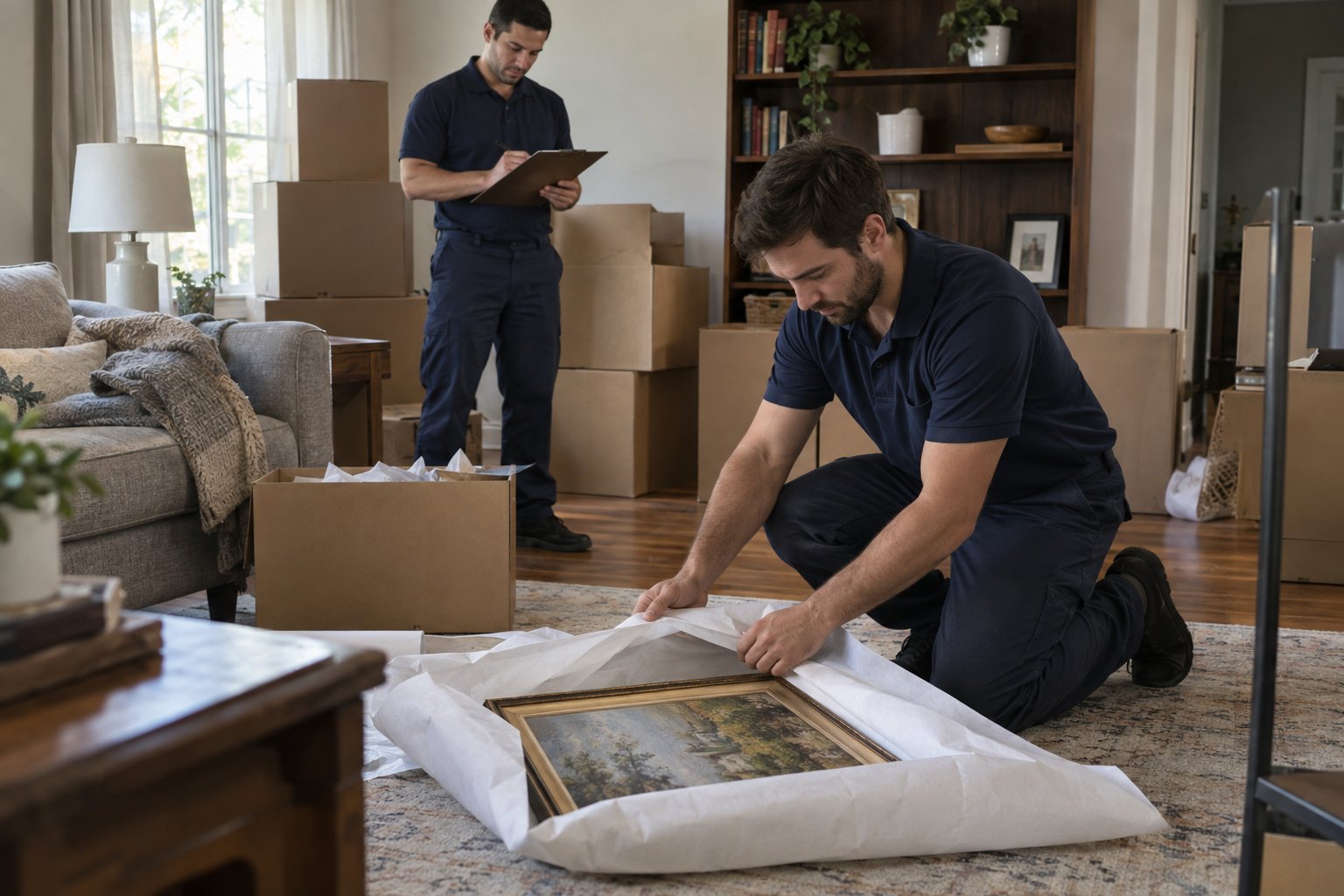
Unlike a rental truck where you ride along and can adjust mid-trip, a POD is sealed and moved without you. Every box, frame, and appliance has to be positioned so it can't tip, slide, or lean on something fragile once the container is in motion. Think of it less like packing a truck and more like packing a shipping crate that will get jostled from multiple directions. If you'd rather hand this part off entirely, a service built around professional packing and loading help can box and stage everything ahead of time so the container only has to be filled once, correctly.
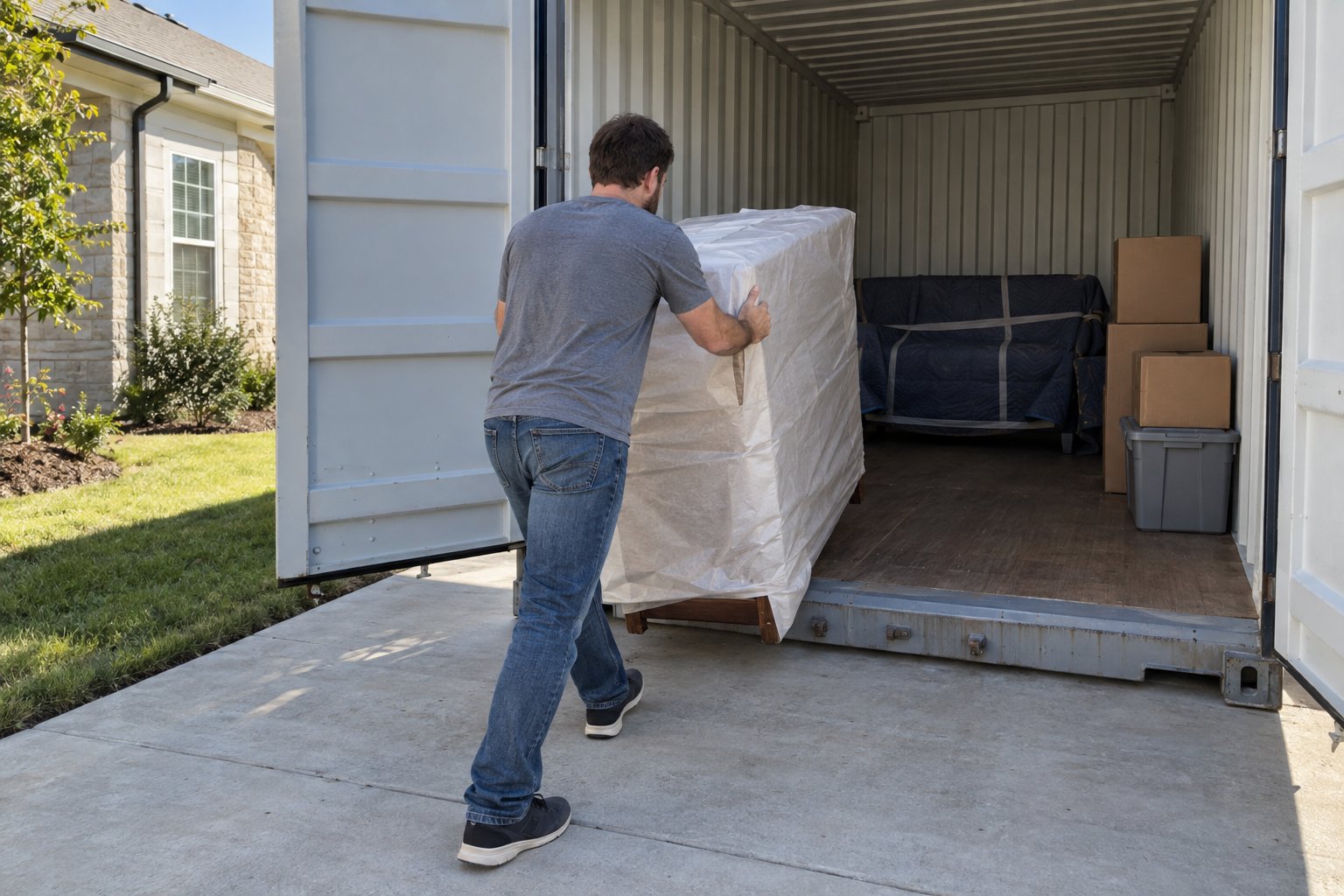
Start with the heaviest, largest items against the back wall, work forward with mid-weight furniture and boxes, and finish with light, crush-resistant items near the door. This "heavy to light, back to front" order keeps the container's center of gravity low and stable for the drive.
Dressers, washers, dryers, and bookcases go in first, flush against the back wall. Distribute this weight evenly across the floor rather than stacking it all on one side, since an uneven load can cause the container to lean during transport.
Bed frames, table legs, and medium boxes fill the middle section. Stand flat items like mattresses and mirrors on their edges along the side walls rather than laying them flat on top of other things, where they're more likely to crack under shifting weight.
Lamps, pillows, soft goods, and boxes marked fragile go in last, near the door where they won't have anything heavy stacked above them. This also puts your most-needed items closest to hand when you unload.
Fill every gap between items with soft, expendable filler like blankets, pillows, or empty duffel bags so nothing has room to move. A POD that's 90% full but loosely packed will shift far more than one that's completely packed solid, even with less total weight inside.
Moving blankets are worth having on hand specifically for this: wedge them between furniture pieces and against the container walls to absorb vibration. Rope or ratchet straps, if your POD has anchor points, should go across tall furniture stacks to keep them from toppling forward when the container brakes or turns. Leave no open columns of air between floor and ceiling if you can help it; if a gap is unavoidable, fill it with lightweight boxes rather than leaving it empty.
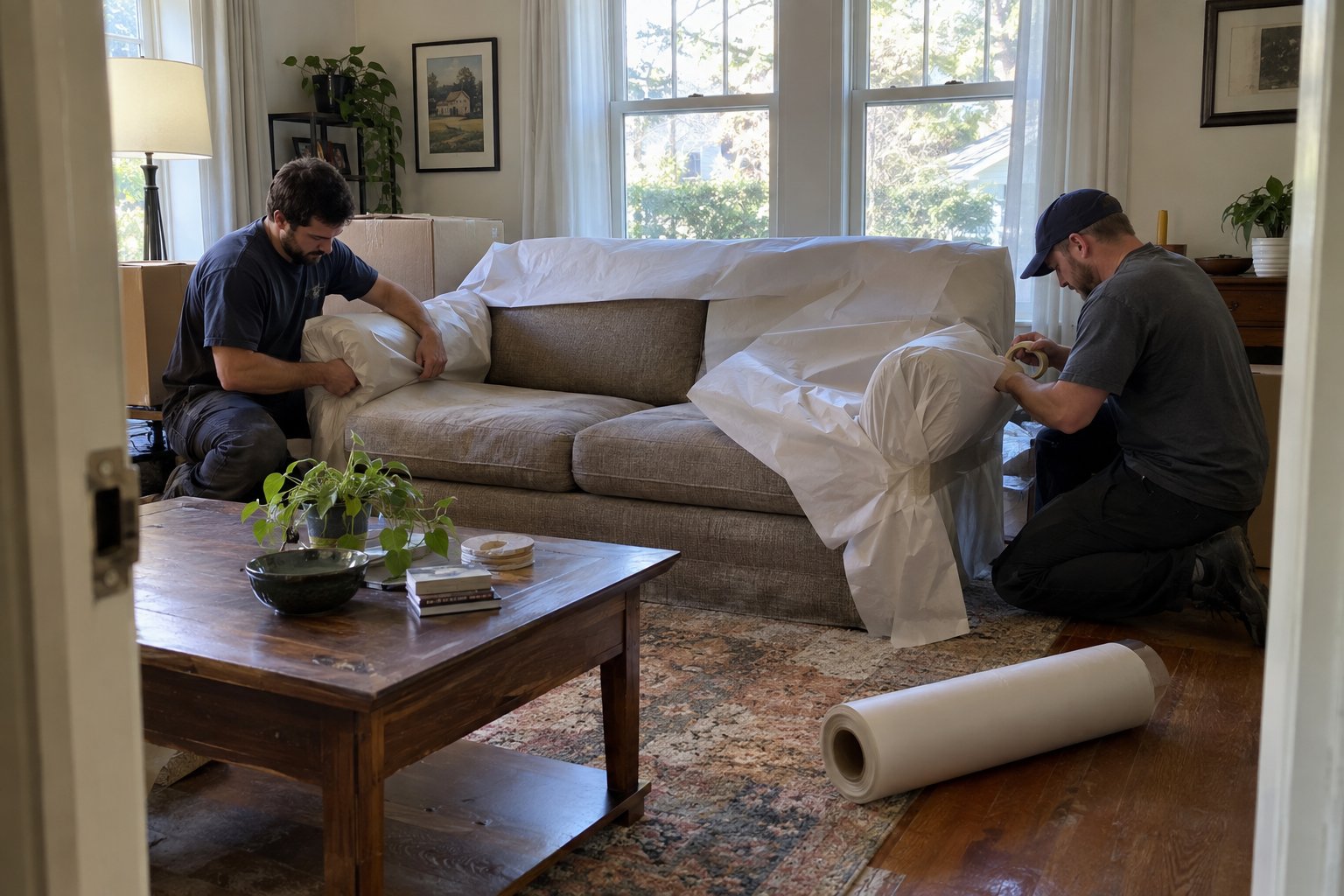
A POD's interior walls and floor are plywood, and they will show dents, scuffs, and stains if furniture rubs directly against them for the length of a long haul. Line the walls with moving blankets or furniture pads before you start loading, not after, so you don't have to shift already-placed items later.
Flatten cardboard boxes or use furniture sliders under the legs of heavy pieces to protect the floor and make repositioning easier while you're still loading. If you're storing the POD outdoors for any length of time before it ships, check the container's door seal and avoid leaning anything directly against it, since condensation can collect there in humid Connecticut weather.
No. A rental truck is driven by you or your crew at controlled speeds over a route you choose, while a POD is handled by a freight driver and may sit on a lot between pickup and delivery. Treat a POD load as something that needs to survive being parked, re-lifted, and driven without any adjustment from you in between.
That means erring on the side of over-securing rather than under-securing. If you wouldn't trust an item to survive a sudden stop with nothing holding it in place, it needs a strap, a blanket wedge, or a repositioned spot lower in the stack.
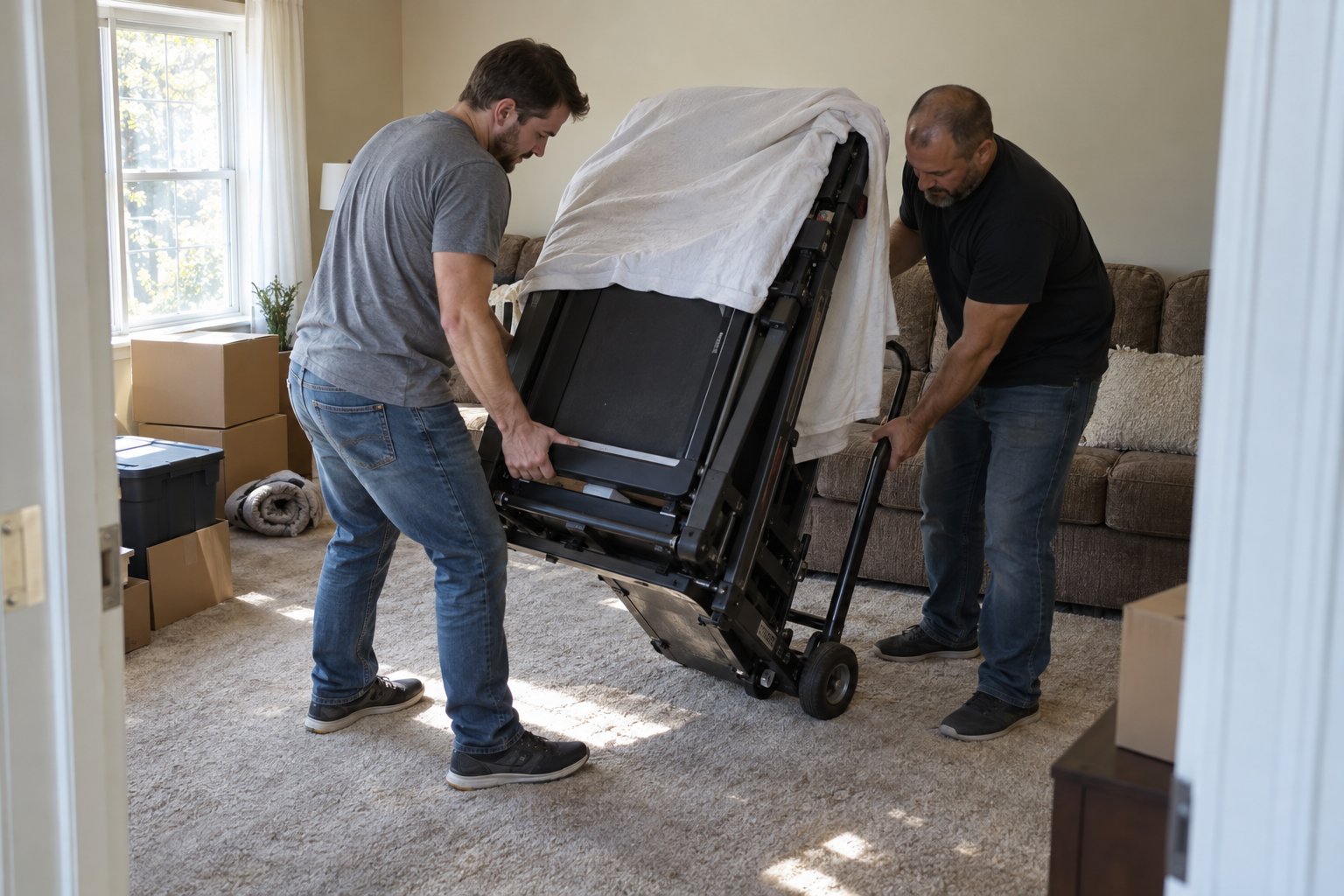
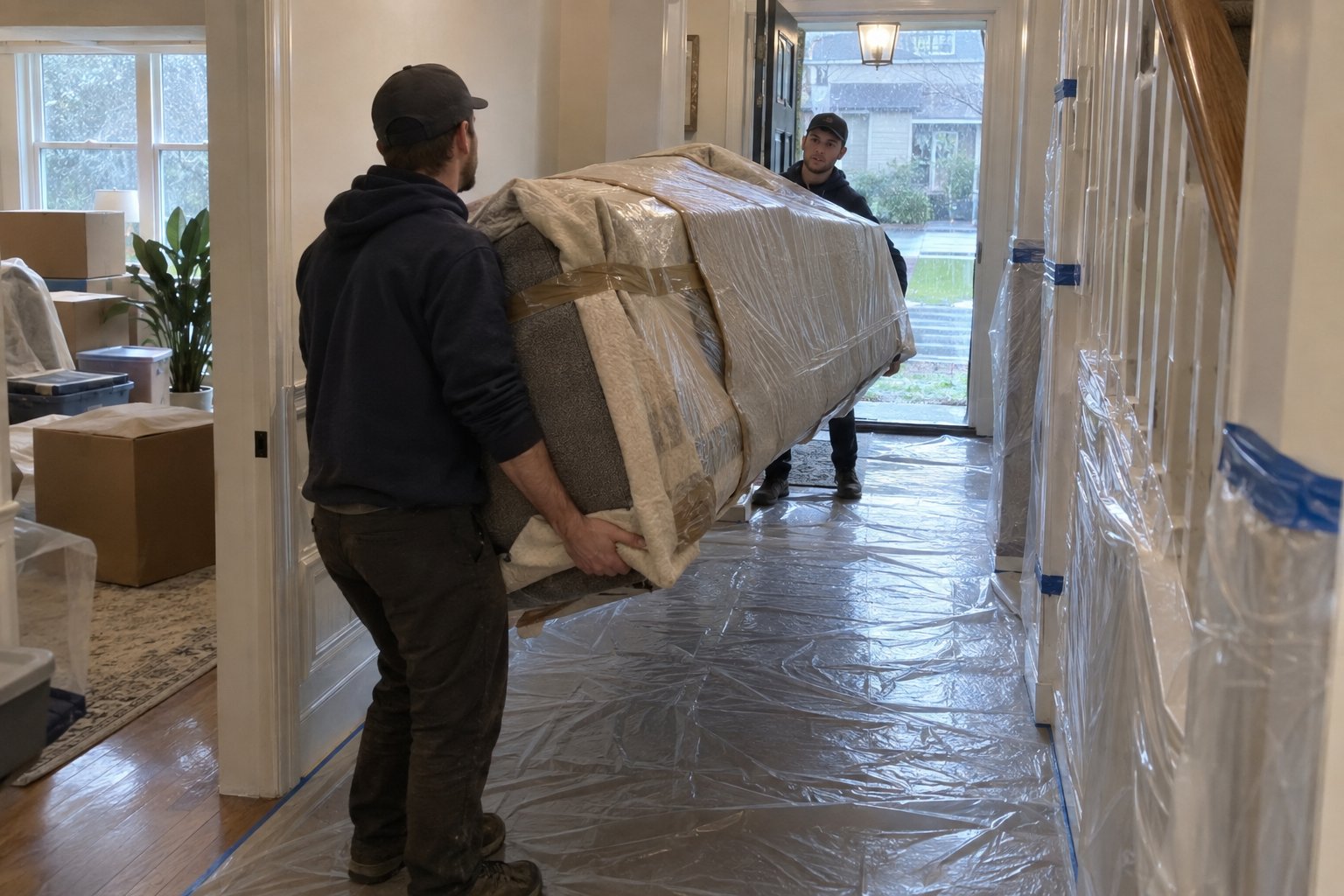
Loading a full household into a POD by yourself is physically demanding and easy to get wrong on weight distribution, especially with large furniture or appliances. If you'd rather not spend a weekend wrestling a dresser into place, a crew that offers labor-only moving help can load the container for you using the same heavy-to-light, wall-to-wall approach, without you needing to rent a truck or drive anything yourself.
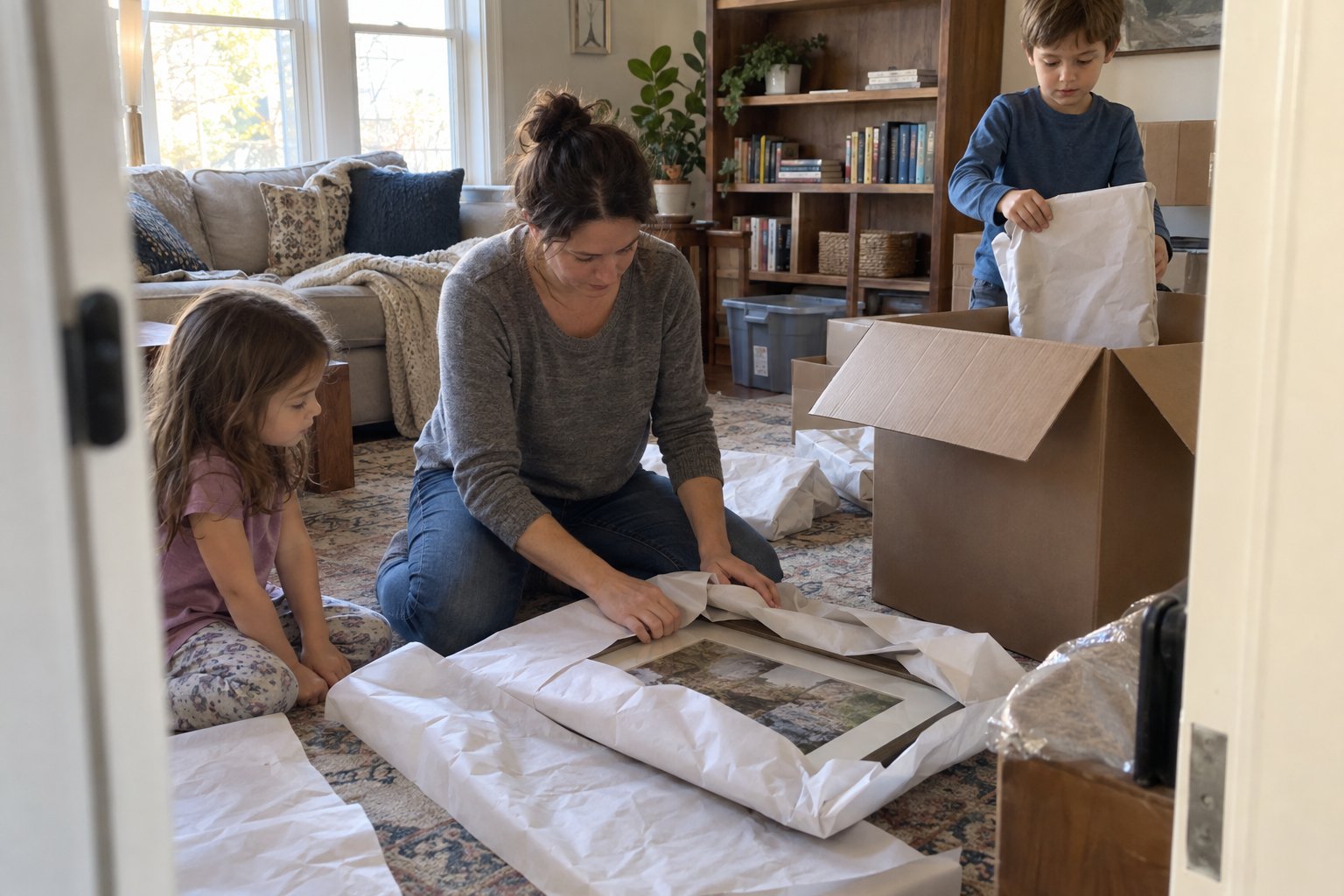
For households juggling a full home's worth of boxes and a tight loading window, working from a clear week-by-week moving timeline ahead of drop-off day helps make sure everything is boxed, labeled, and ready to load before the container even arrives, instead of scrambling the morning it shows up.
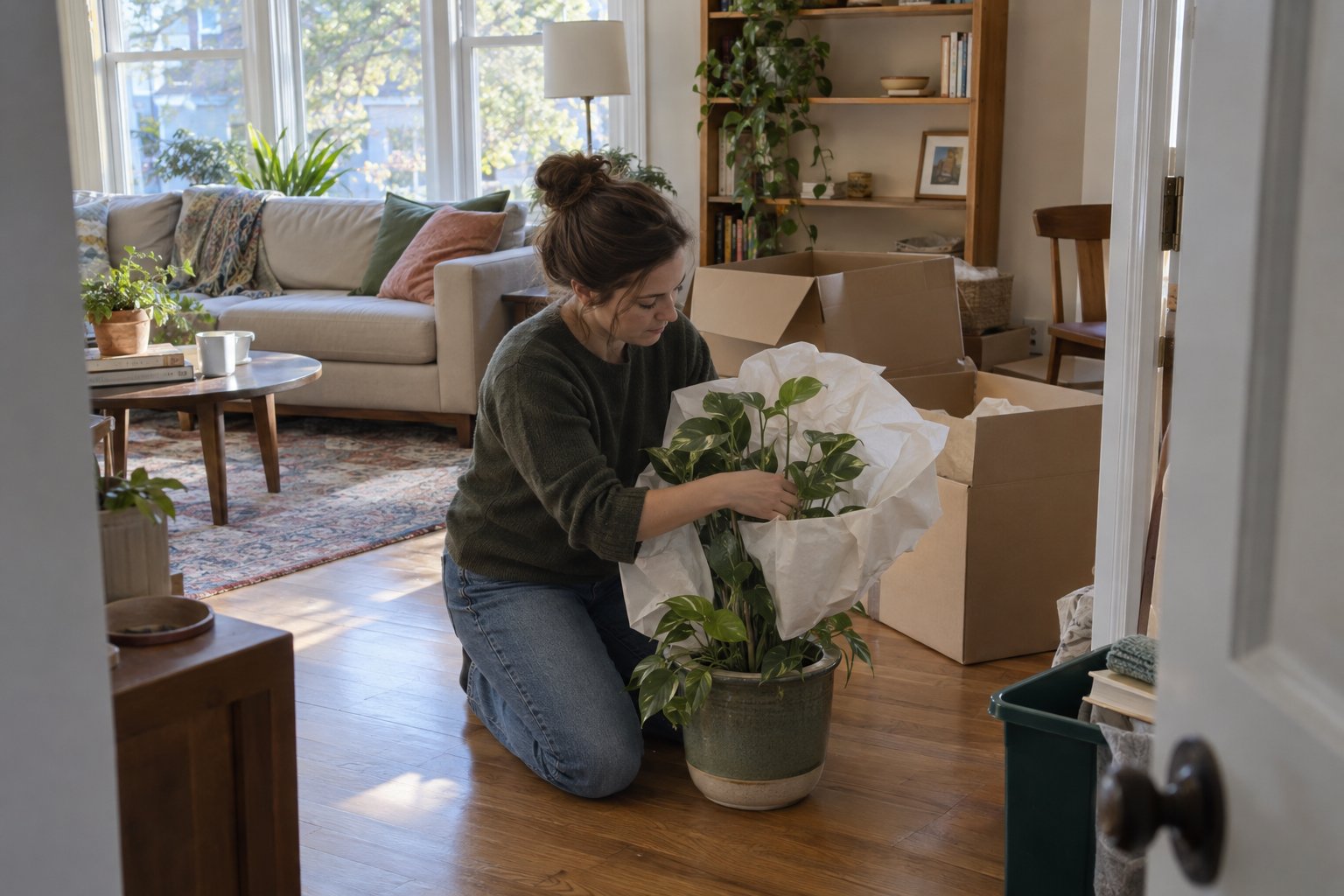
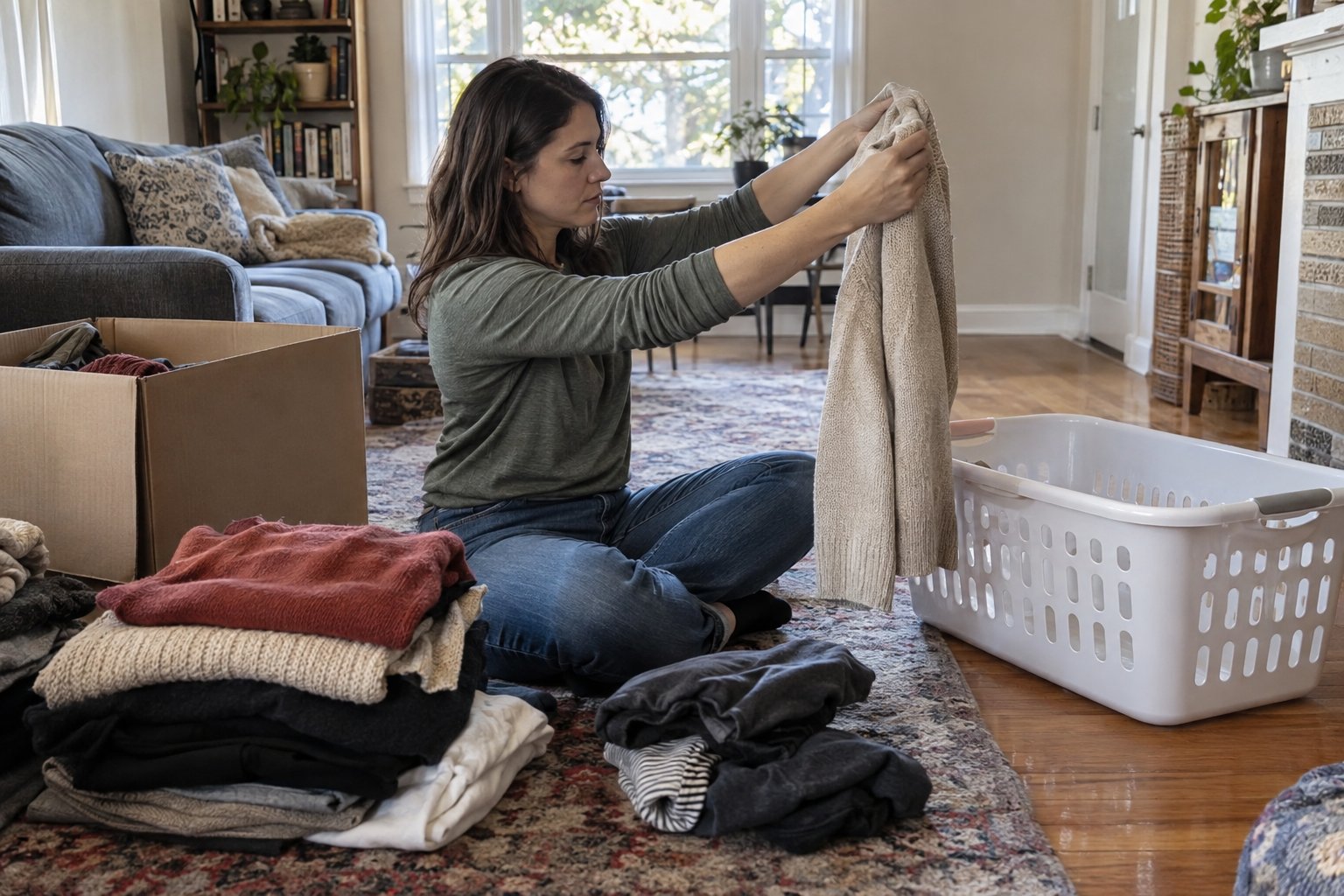
Most of the work that makes a POD load go smoothly happens before the container is even dropped off. Disassemble large furniture in advance, confirm every box is sealed and labeled by weight and room, and clear a flat, accessible spot in your driveway or lot for drop-off.
If you're not confident tackling the load alone, it's worth requesting a written quote and talking through your inventory with a crew that handles this regularly. You can get a moving quote and ask specifically about container loading help as part of the conversation.
POD rental and truck rental pricing both vary by container size, distance, and how long you need the unit, so it's best to request quotes directly from the providers you're considering rather than relying on general estimates. If you're also hiring help to load the container, ask for a written quote that covers both the labor and any logistics specific to container loading.
It's better to stand a mattress on its edge along a side wall than to lay it flat on top of boxes, since a flat mattress under no weight can bow or sag over a long haul, and anything stacked on top of it risks sliding off during transport.
A POD doesn't need to be floor-to-ceiling full, but it should have no large open gaps where items can shift. Filling remaining space with soft items like pillows, blankets, or empty bins keeps everything locked in place even if you have room to spare.
Moving blankets and furniture pads are the minimum, and ratchet straps or rope are helpful if your container has anchor points for securing tall stacks. A furniture dolly also makes it much easier to move heavy pieces into position without straining your back or scuffing the floor.
This depends entirely on the storage or shipping plan you choose with the container provider, since PODs can be kept on your property, moved to a storage facility, or shipped to a new address on different timelines. Check with your provider about climate exposure if your container will sit outside for more than a few days.
Long distance moving throughout all of New England and the tristate area (NY, NJ, PA) as well!
From North Branford to communities across Connecticut, CT Family First Movers is here when you need residential, commercial, or long-distance moving services. Request your free quote today.