Written by:
CT Family First Movers
Published:
October 9, 2026
Learn how to pack plants for a move, from watering timing to box ventilation, so your houseplants arrive healthy in your new Connecticut home.
Knowing how to pack plants for a move comes down to timing the watering right, choosing boxes or containers that let in air and light, and keeping the ride as short and temperature-controlled as possible. Plants are living cargo, not furniture. They can tolerate a bumpy afternoon in a car far better than days sealed in the dark cargo hold of a moving truck, which is why the right approach depends heavily on how far you're going and how you're getting there.
This guide covers how to prepare houseplants before moving day, what to actually pack them in, and when it makes more sense to let them ride with you instead of the movers.
Start preparing your plants about one to two weeks before moving day, not the night before. This gives root-bound plants time to be repotted into sturdier plastic containers, lets you treat for pests so you're not bringing bugs into your new home, and gives the plant a chance to recover from any stress before the bigger stress of transit hits.
If a plant is in a heavy ceramic or terra cotta pot, consider temporarily moving it into a lightweight plastic nursery pot for the trip. You can always repot it back into the decorative container once you've unpacked. This single step prevents more cracked pots and spilled soil than anything else on this list.
Check leaves and soil for pests during this window too. Spider mites, aphids, and gnats are already stressed plants' worst enemy, and a cross-country or even cross-town move is exactly the kind of stress that lets an existing infestation explode.
Water your plants two to three days before the move, not the morning of. Soil that's slightly on the dry side travels far better than soggy soil, which is heavy, prone to leaking through drainage holes, and more likely to encourage root rot when the plant is stuck in a dark box or car for hours.
A good rule: the top inch of soil should feel dry to the touch before the plant gets loaded. If you're moving during a Connecticut summer and the drive is short, you can get away with watering closer to moving day. For longer trips or a plant that will sit in a hot or cold vehicle for an extended stretch, err dry.
Skip fertilizing in the two weeks surrounding your move. Fertilizer pushes new growth right when the plant should be conserving energy to handle the shock of relocation.
The best way to pack plants for a short trip is to stand them upright in sturdy, open or ventilated boxes with handles cut into the sides, never sealed shut like a normal moving box. Plants need airflow and at least some light, so a fully taped box is the fastest way to stress or kill them before you even arrive.
For small to medium plants, a milk crate or a box with the top flaps cut off works well. Line the bottom with a plastic bag or tray to catch any soil or moisture, then nest the pot inside with crumpled newspaper around the base to keep it from tipping during transit. If you'd rather not improvise with cardboard, stackable bins designed for moving can double as ventilated plant crates since their rigid sides hold shape better than a cut-down box; our plastic bin rental service is worth a look if you're already renting bins for the rest of the house.
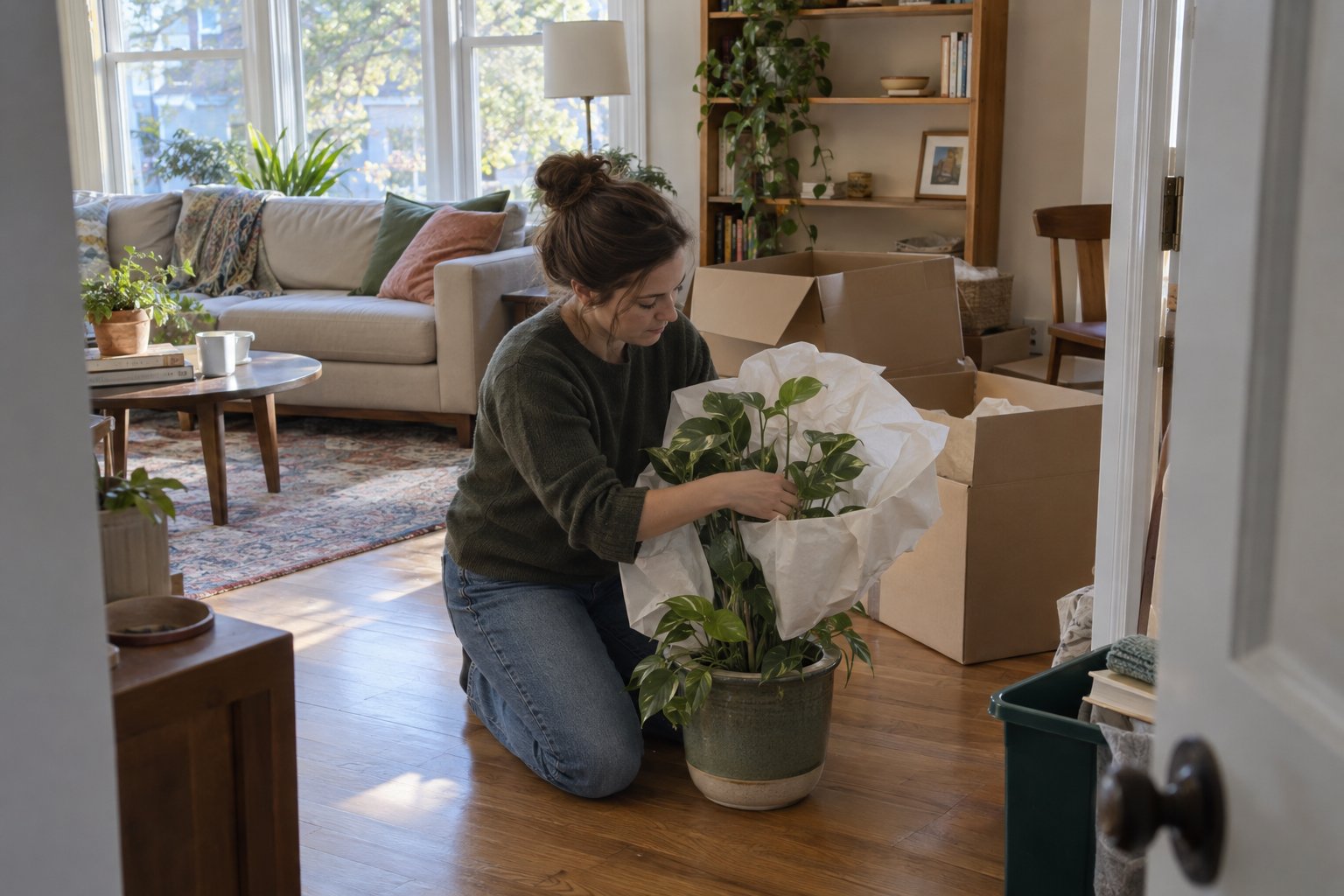
For plants with delicate leaves or trailing vines, loosely wrap the foliage in a sheet of unwaxed packing paper shaped like a cone, wide at the bottom and narrow at the top, before placing the pot in its box. This keeps leaves from snapping against box edges or other plants without crushing them the way a tight wrap would. Tape the paper to itself, never directly to the leaves.
Taller plants benefit from a bit of stabilizing structure, such as a few bamboo stakes gently secured to the main stem, so a sudden stop in the car or truck doesn't snap the plant at the base.
Leave gaps between plant boxes rather than stacking them tightly. Plants need some air circulation around them, and stacking anything on top of a plant box, even a light item, can crush stems you didn't realize were poking above the rim.
Plants should almost always ride with you in your own vehicle rather than in the moving truck. Moving trucks are rarely climate controlled, cargo space can reach extreme temperatures in both summer and winter, and a truck packed full of furniture and boxes gives plants no light at all for however long the trip takes.
For a local move across town or between nearby Connecticut towns, this is simple: a few trips back and forth in your own car before or after the main move handles it. For longer distance relocations, it gets more complicated. Many interstate moving companies won't transport live plants at all due to agricultural regulations that vary by state, and some states restrict what plants can even cross their borders.
If you're relocating a significant distance and can't bring every plant in your own car, be realistic about which ones are worth the trouble. Common, easily replaceable houseplants may be better given to a friend or donated locally, while a plant with sentimental value is worth the extra planning to transport properly. If your move involves a long-distance carrier, it's worth reviewing our guide to local vs. long-distance moving in Connecticut to understand how those regulations and logistics differ from a move across town.
Protect plants from temperature swings by never leaving them in a parked car, especially in summer heat or winter cold, even for a quick errand. A closed vehicle can swing to extreme temperatures within minutes, and most houseplants start suffering stress well before a human would feel uncomfortable.
During the drive itself, keep plants away from direct blasts of air conditioning or heat vents, and avoid placing them against a window where they'll get intense direct sun for hours. A spot on the floor behind the front seats, or secured on a back seat with a seatbelt for stability, usually works well.
If you're moving during a stretch of extreme Connecticut weather, whether a summer heat wave or a winter cold snap, give extra thought to the time of day you travel and how long plants will be exposed between the old home, the car, and the new one.
If your plant collection is large, or you simply don't have room in your own car once family and essentials are loaded in, it's worth planning around it rather than leaving it to moving day chaos. Some families designate one vehicle entirely for plants and fragile items while the moving crew handles everything else, which keeps breakable and living items out of the shuffle entirely.
For the rest of the household's fragile and breakable belongings, which plants are often packed alongside, hiring out the work can take the pressure off. Our packing services cover the dishes, glassware, and décor that need the same careful wrapping and box selection as a plant collection, so your own packing time can go toward the living items only you can prepare. A crew experienced with household goods can also give you the extra time and hands needed to make multiple car trips before the truck arrives.
Before you leave your old home for good, do one last check of every room for plants tucked into corners, bathrooms, or on high shelves that are easy to forget. A quick pass with your moving day checklist helps catch these along with everything else easy to overlook in the final rush.
Once you're settled, give your plants a few weeks to acclimate to new light conditions before worrying too much about dropped leaves or slow growth. This is normal post-move stress for most houseplants and usually resolves once they adjust to their new spot.
Most moving companies, especially for long-distance and interstate moves, will not transport live plants due to agricultural regulations and the risk of pests or disease crossing state lines. For local moves, some movers may allow plants to ride along, but it's best to confirm with your mover ahead of time and plan to transport valuable plants in your own vehicle.
Water two to three days ahead so soil is damp but not soggy, nest each pot in a stable, ventilated box with crumpled paper around the base, and loosely wrap delicate foliage in packing paper. Keep plants out of direct AC or heat vents and avoid leaving them in a parked car for long stretches.
Water a few days before the move rather than the morning of, so the soil has time to firm up and isn't dripping or overly heavy during transit. Soil that's slightly dry travels better and is less likely to encourage mold or root rot in a closed box.
Line the bottom of the pot's box with a plastic bag or tray, and consider covering the soil surface with a layer of plastic wrap or a damp paper towel tucked around the base of the stem before transit. This keeps loose soil contained even if the pot tips slightly.
If a plant is in a heavy ceramic or breakable pot, it's safer to temporarily move it into a lightweight plastic nursery pot about a week or two before the move, then repot it back into its decorative container once you've unpacked. This reduces breakage risk and gives the plant time to recover from the disturbance before the added stress of the move itself.
Long distance moving throughout all of New England and the tristate area (NY, NJ, PA) as well!
From North Branford to communities across Connecticut, CT Family First Movers is here when you need residential, commercial, or long-distance moving services. Request your free quote today.