Written by:
CT Family First Movers
Published:
October 20, 2026
Learn how to protect floors and walls during a move, from doorway padding to furniture sliders, so you don't hand your new home back with scuffs and dents.
Protecting floors and walls during a move comes down to three habits: covering high-traffic paths before anything gets carried through them, using the right tool (sliders, dollies, or extra hands) for anything too heavy to lift cleanly, and padding the specific pinch points, door frames, stair corners, and tight hallway turns, where furniture actually makes contact. Most damage on moving day happens in the same few spots, not randomly throughout the house, so a little targeted prep goes a lot further than trying to blanket the whole home.
This matters whether you own the place or you're trying to get your security deposit back. Hardwood gouges, drywall dings, and carpet stains are the kind of damage that's cheap to prevent and expensive to fix after the fact. Here's how to keep your old home and your new one looking the way you found them.
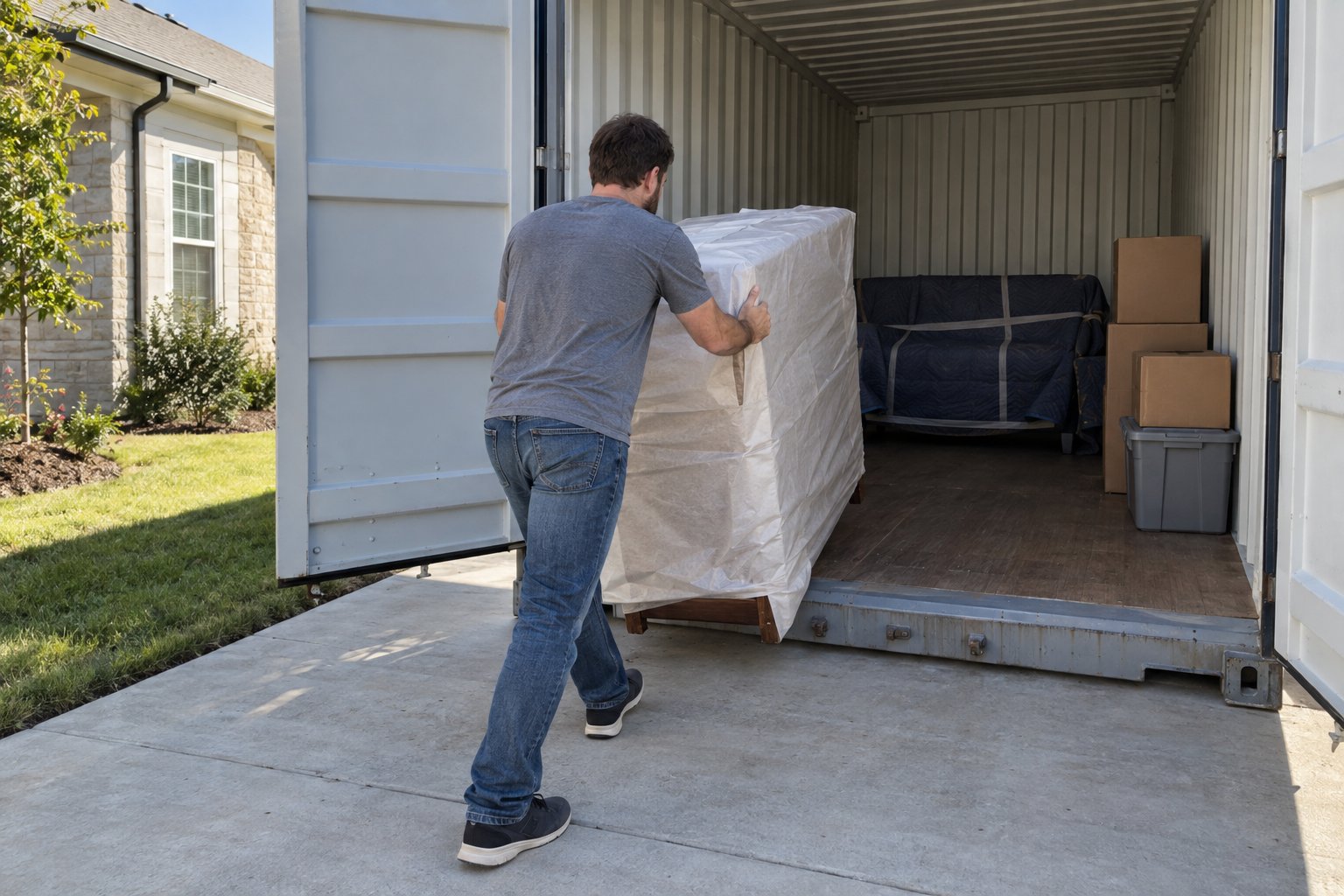
Most moving damage happens because heavy items get dragged, pivoted, or bumped through tight spaces instead of carried cleanly on a direct path. A dresser corner catching a door frame, a sofa leg scraping across hardwood, or a dolly wheel grinding grit into carpet are the usual culprits, not dramatic drops or accidents.
Carrying teams under time pressure tend to take the fastest path rather than the safest one, which is exactly when corners get clipped and floors get scuffed. Knowing the common failure points ahead of time lets you set up protection before the first box leaves the house instead of patching drywall afterward.
Door frames, stairwell turns, and the threshold between rooms with different flooring (carpet to hardwood, tile to laminate) see the most contact. Elevators and narrow apartment hallways add their own risk because there's less room to adjust a bad angle mid-carry.
The fastest way to protect floors is to stop dragging furniture altogether and start sliding it on purpose-built gliders, or lifting it onto a dolly. Furniture sliders (felt pads for hardwood, hard plastic discs for carpet) let two people move a heavy dresser or couch across a room with almost no friction and no scrape marks.
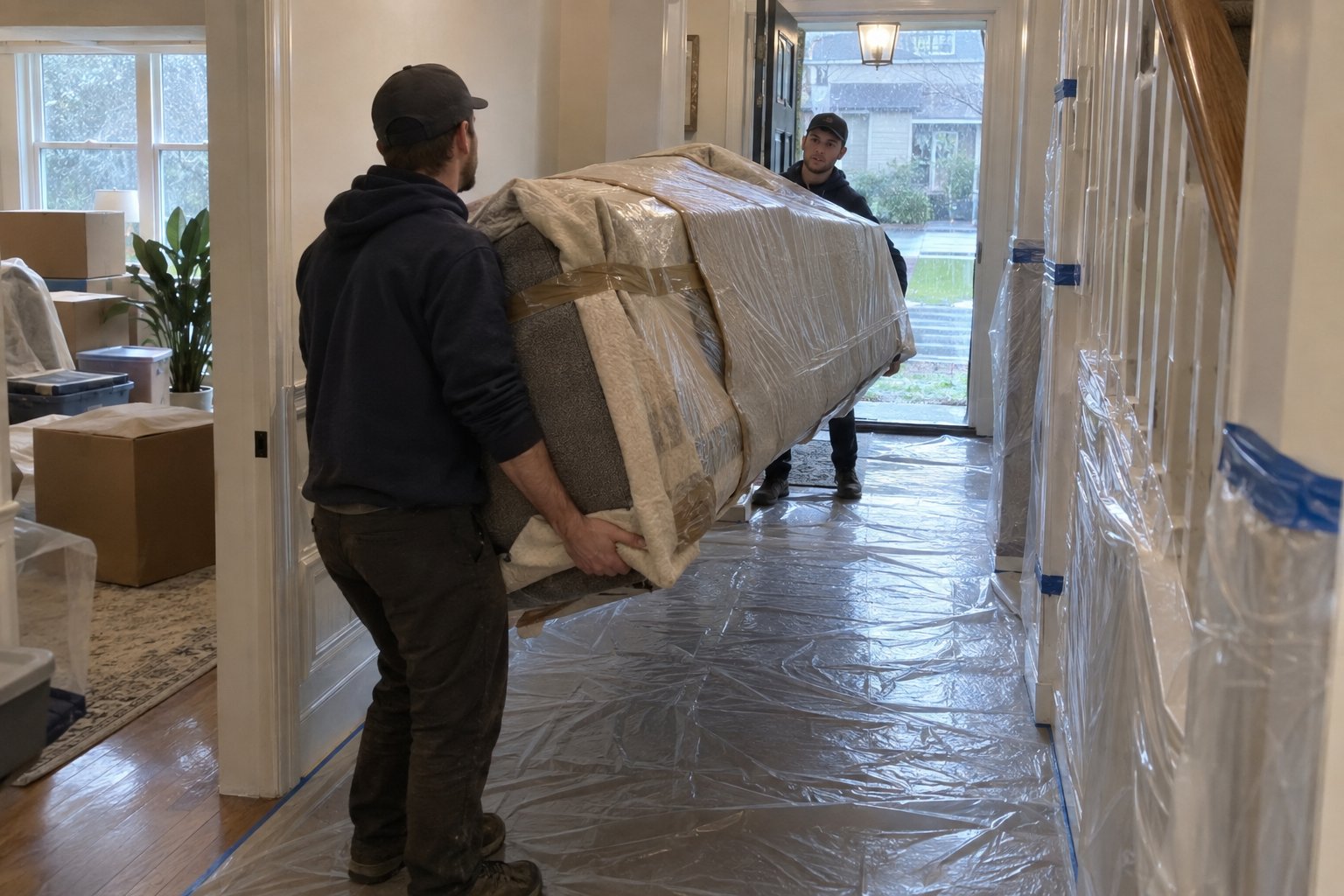
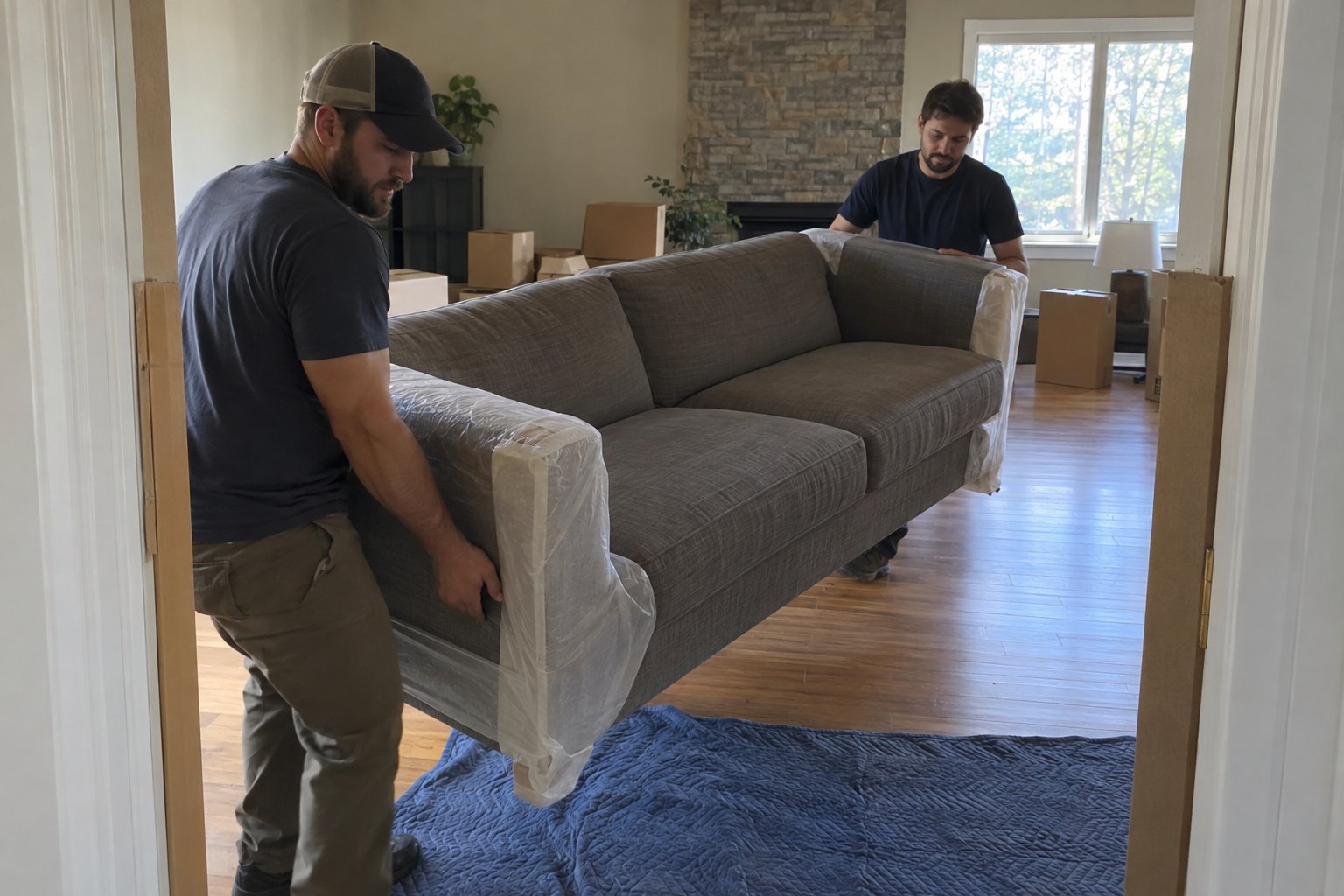
For hardwood, tile, and laminate, lay down ram board, rosin paper, or moving blankets along the path the crew will actually walk, not just the room where the furniture starts. Tape it down so it doesn't slide underfoot and become a tripping hazard. On carpet, a layer of plastic film or an old sheet over the main walkway keeps dirt and dolly tracks from grinding in, which matters more than most people expect on light-colored carpet.
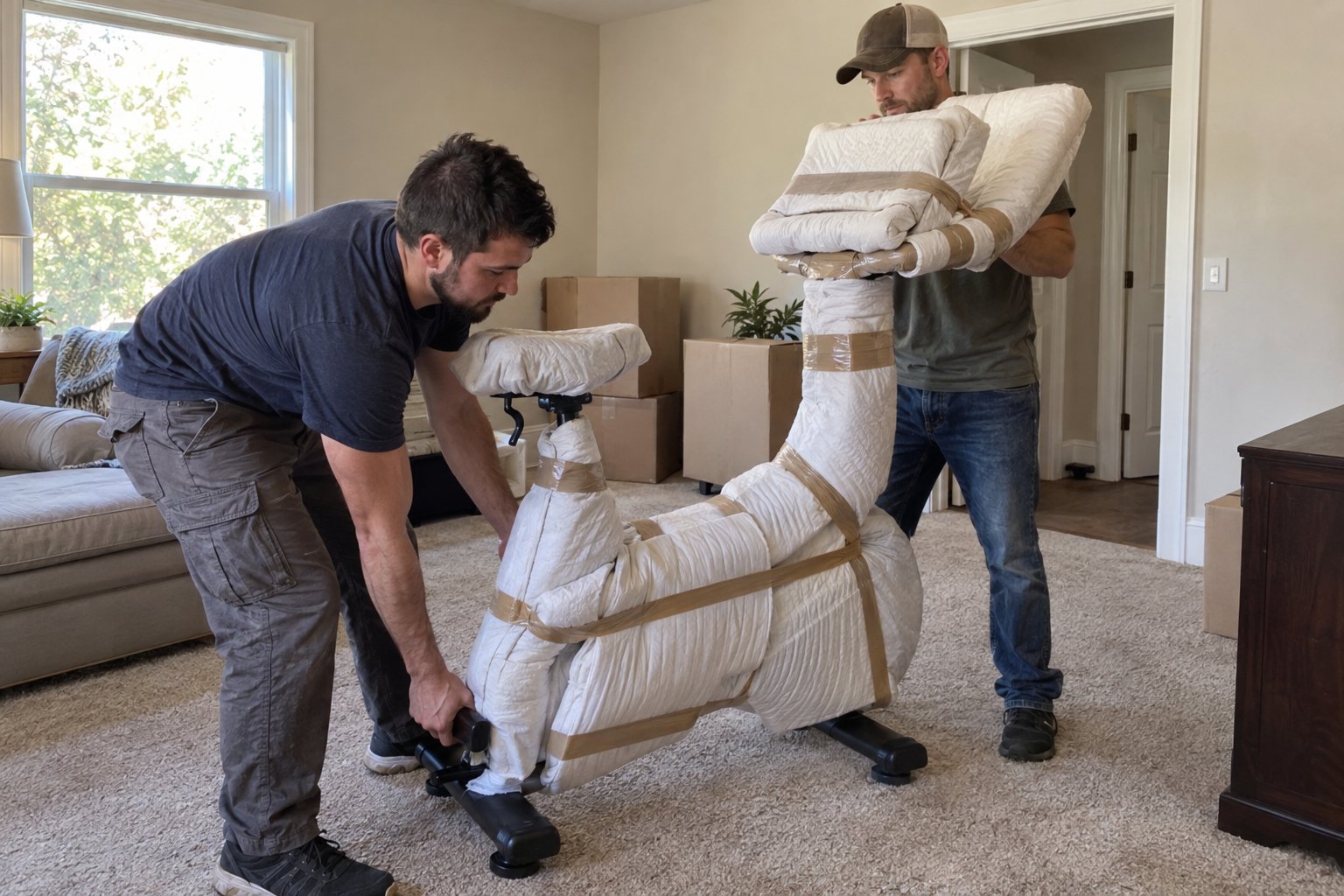
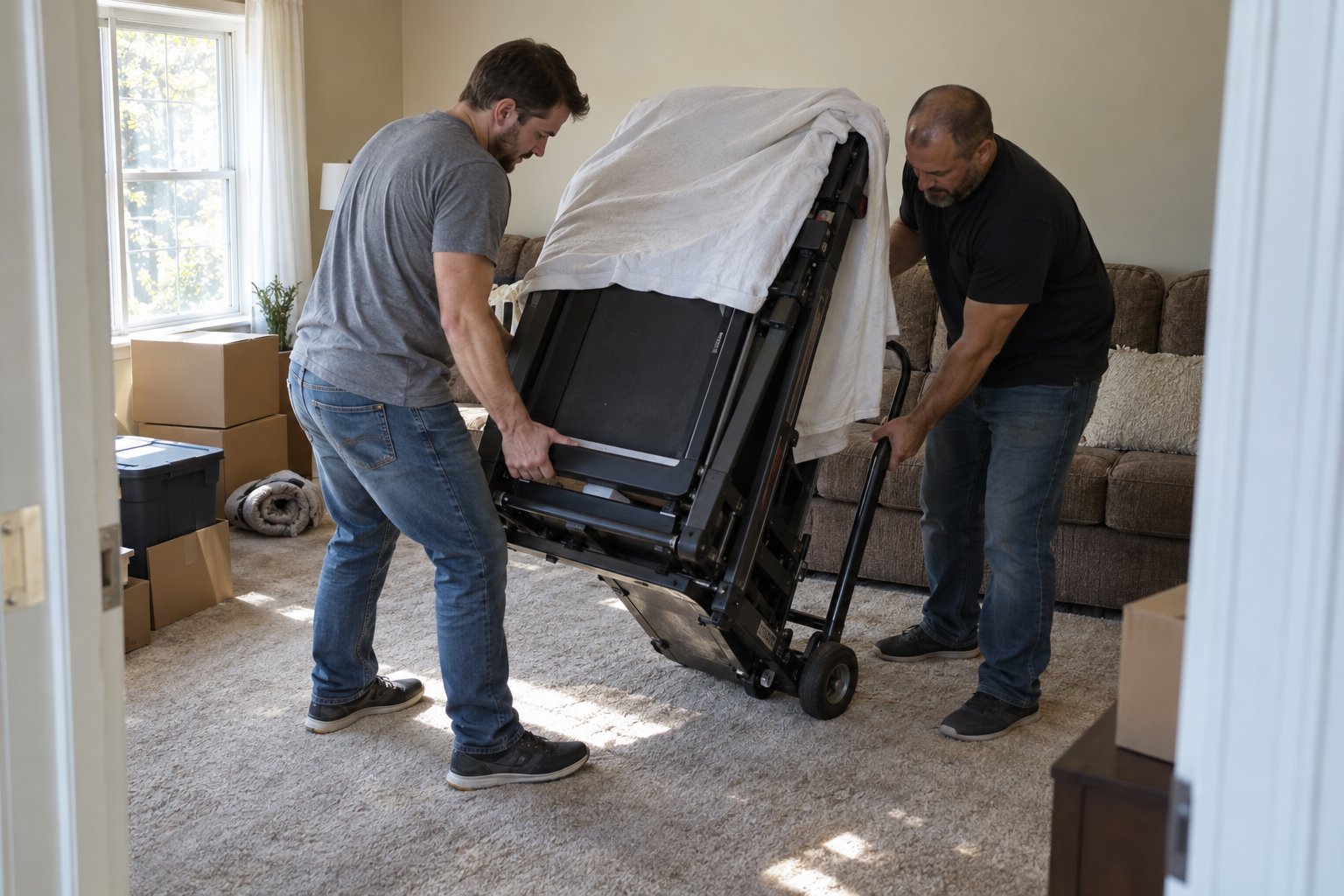
A furniture dolly takes weight off the floor entirely by keeping the item rolling rather than sliding, but only if it's loaded so the weight sits centered over the wheels. An unbalanced load tips, and a tipping dresser does more floor and wall damage in one bad moment than an hour of careful dragging would.
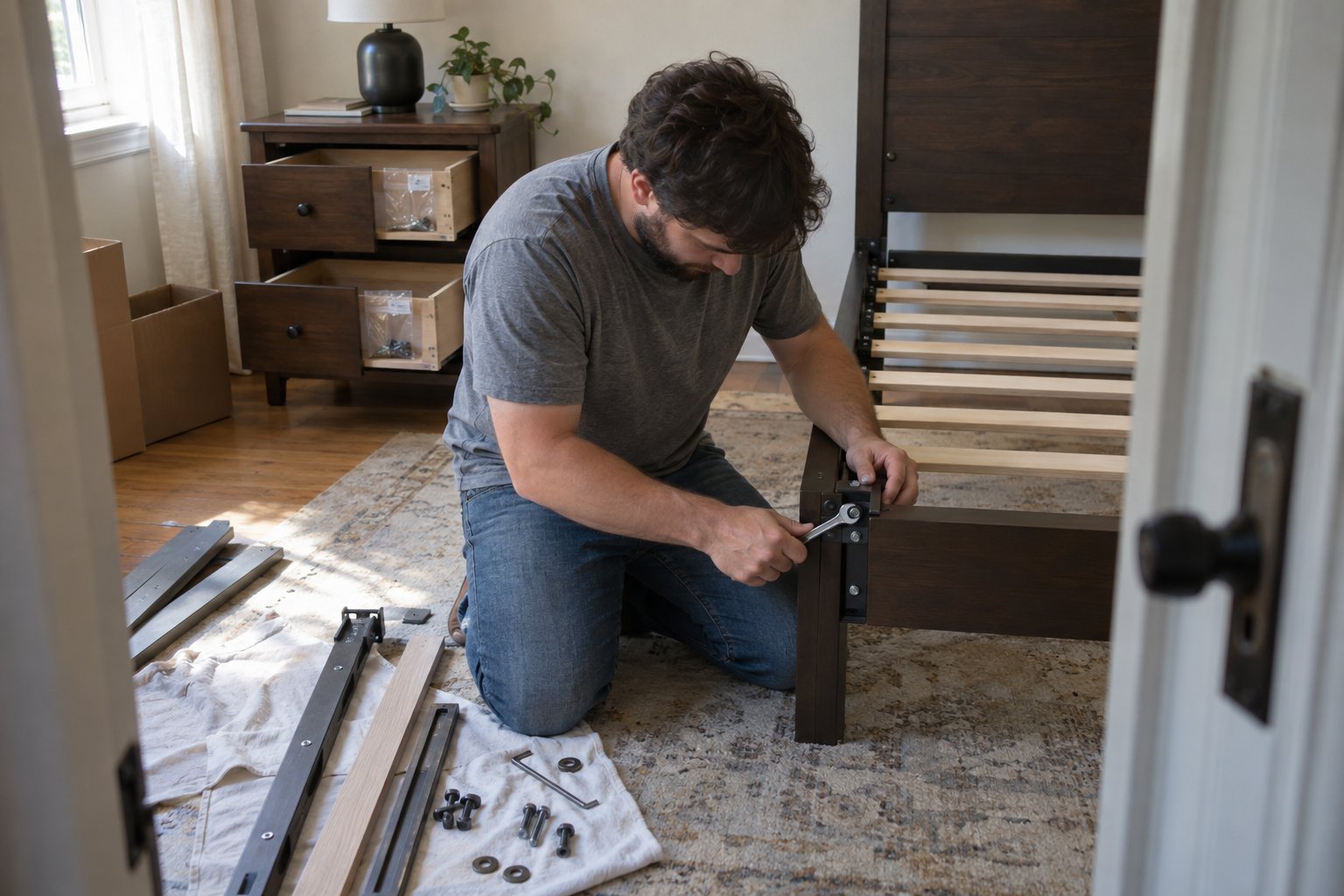
Wall and door frame damage is almost always a width problem: the piece of furniture is wider than the gap it's moving through, and something has to give. The fix is measuring the item and the opening before you attempt the carry, then padding the frame itself as a backup in case the angle isn't perfect.
Foam corner guards or folded moving blankets taped around door frame edges absorb the impact if a dresser or mattress clips the frame on the way through. For stairwells, pad the wall at the height where furniture corners typically pass, usually waist to shoulder height, since that's where repeated contact leaves the worst dents and paint scuffs.
Most furniture that "doesn't fit" actually does, once it's tilted on a diagonal rather than carried flat. Sofas, mattresses, and large dressers almost always clear a standard doorway when one end is raised and the piece is walked through at an angle, rather than pushed straight through level.
Set up protection along the main path, not the whole house, before anyone starts carrying. Focus on the route from the farthest room to the truck or elevator, since that's the path every heavy item will travel multiple times, and any weak point in it gets tested repeatedly over the course of the day.
Yes. Experienced movers bring their own blankets, floor runners, and door jamb protection and know how to angle large pieces through tight spots, which is exactly why local moving services cut down on this kind of damage compared to a DIY move with mismatched helpers. But a little prep on your end, clearing the path and pointing out tight turns before the carrying starts, still helps the crew work faster and more carefully.
If you're moving out of a rental, ask your packing services provider or crew lead whether they can pad specific areas your landlord flagged during the move-in walkthrough. It's a small ask that can save a deduction from your deposit later.
Before the truck pulls away, walk the same path the crew used, room by room, and check the floors and walls you protected. Catching a scuff or a loose corner guard immediately means you can address it right away instead of discovering it weeks later and wondering when it happened.
If you're relocating within our New Haven service area or anywhere nearby, a free moving quote is a good next step. It gets you a crew that already knows how to navigate tight Connecticut hallways, narrow stairwells, and older homes without leaving a mark.
Ram board, rosin paper, or thick moving blankets taped along the main carry path work best for hardwood. Felt furniture sliders also help by letting heavy pieces glide instead of drag, which is where most hardwood scratches come from.
Yes, but you need the carpet-specific version. Hard plastic discs designed for carpet let furniture glide over the pile instead of digging in, while the felt pads made for hardwood tend to bunch up and grip carpet fibers instead of sliding.
Tilt the couch onto one end and walk it through the doorway on a diagonal rather than carrying it flat. Padding the door frame with a folded moving blanket beforehand gives you a margin of error if the angle isn't perfect on the first try.
Most professional crews bring floor runners and door jamb padding as standard practice, but it's worth confirming ahead of time, especially in an apartment with shared hallways or an elevator where building management may require it.
Pad the wall at the height where furniture corners typically pass, generally waist to shoulder level, since that's where repeated contact causes the most dents and scuffs on a stairwell. Moving blankets taped at the corners work well for this.
Long distance moving throughout all of New England and the tristate area (NY, NJ, PA) as well!
From North Branford to communities across Connecticut, CT Family First Movers is here when you need residential, commercial, or long-distance moving services. Request your free quote today.