Written by:
CT Family First Movers
Published:
October 23, 2026
Not sure how to take apart furniture before a move? Learn what to disassemble, what tools you need, and how to keep every bolt organized for easy reassembly.
Knowing how to take apart furniture before a move comes down to three things: identifying which pieces actually need to come apart (not everything does), keeping hardware labeled and grouped by piece instead of tossed in one junk drawer, and following the manufacturer's assembly order in reverse so you're not fighting the frame later. Skip any of those three and you'll spend moving-in day hunting for a bag of bolts that could be anywhere in a truck full of boxes.
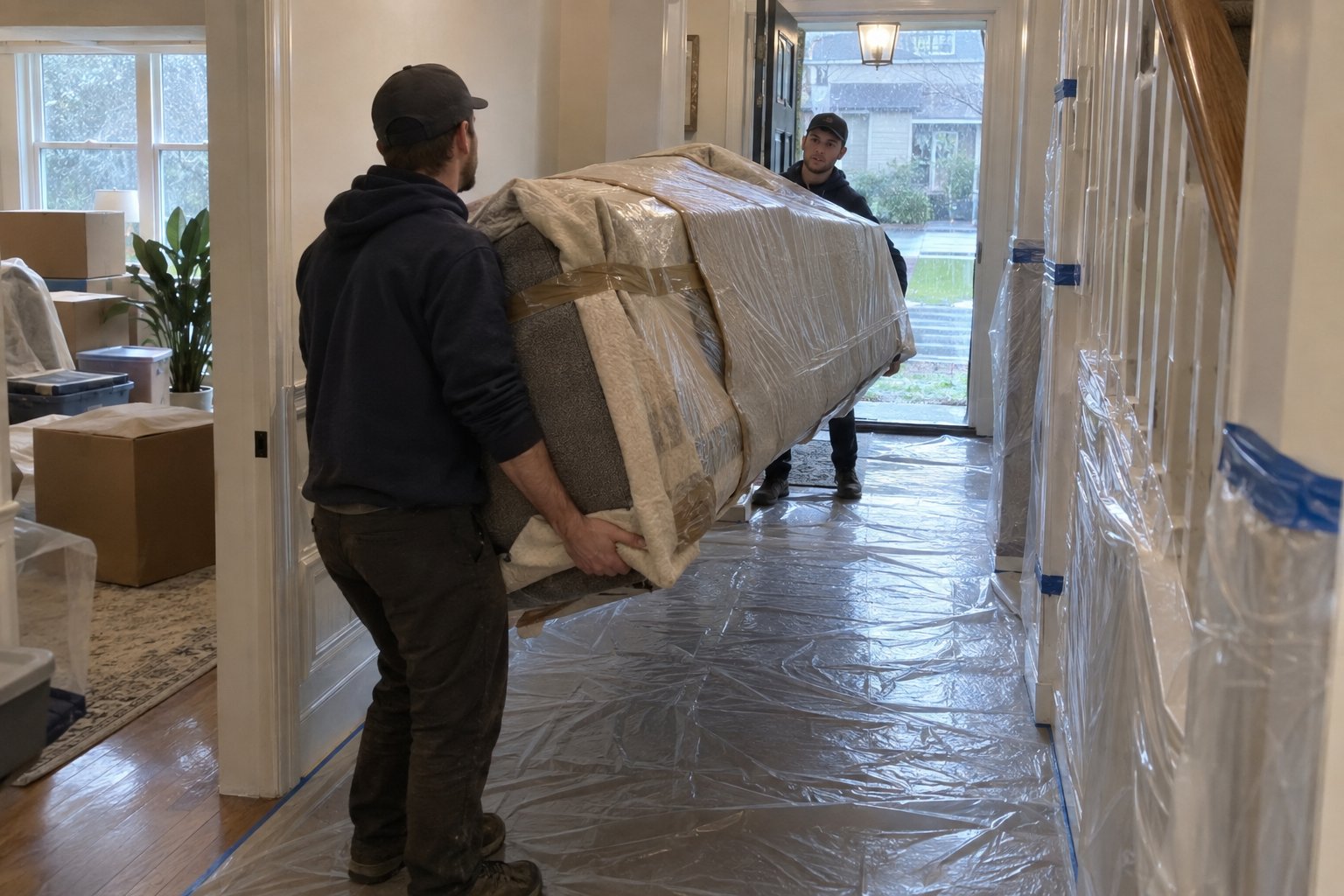
Disassembly isn't just about fitting furniture through doorways, although that matters too. Taking a bed frame, a sectional, or a large bookcase apart protects the joints and hardware from the stress of being carried whole, and it almost always makes a piece lighter and easier to maneuver through stairwells and tight hallways. Here's how to do it in a way that doesn't turn reassembly into a guessing game.
Not every piece in your home needs to be broken down. As a general rule, disassemble anything with a bed frame structure, a large sectional or modular sofa, a dining table with removable legs, a bookcase or wardrobe taller than it is wide, or anything that won't clear a doorway, stairwell, or hallway turn at its current size.
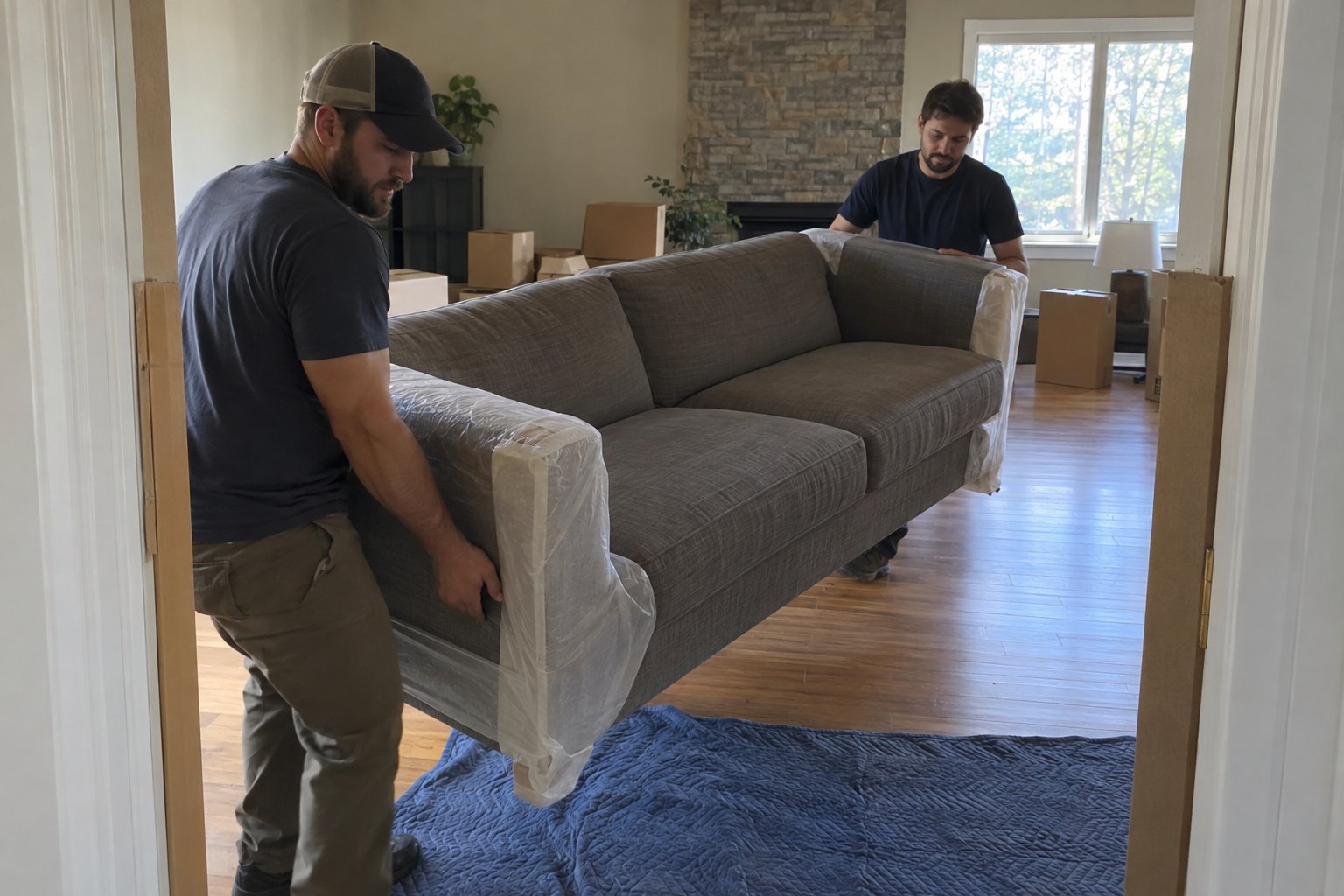
Dressers, nightstands, and most sofas can usually travel whole. Before you decide, measure the widest point of the piece against the narrowest point it has to pass through, including stair landings and doorframes, not just the final room. If the numbers are close, take it apart. A piece that barely fits is a piece that leaves a dent somewhere.
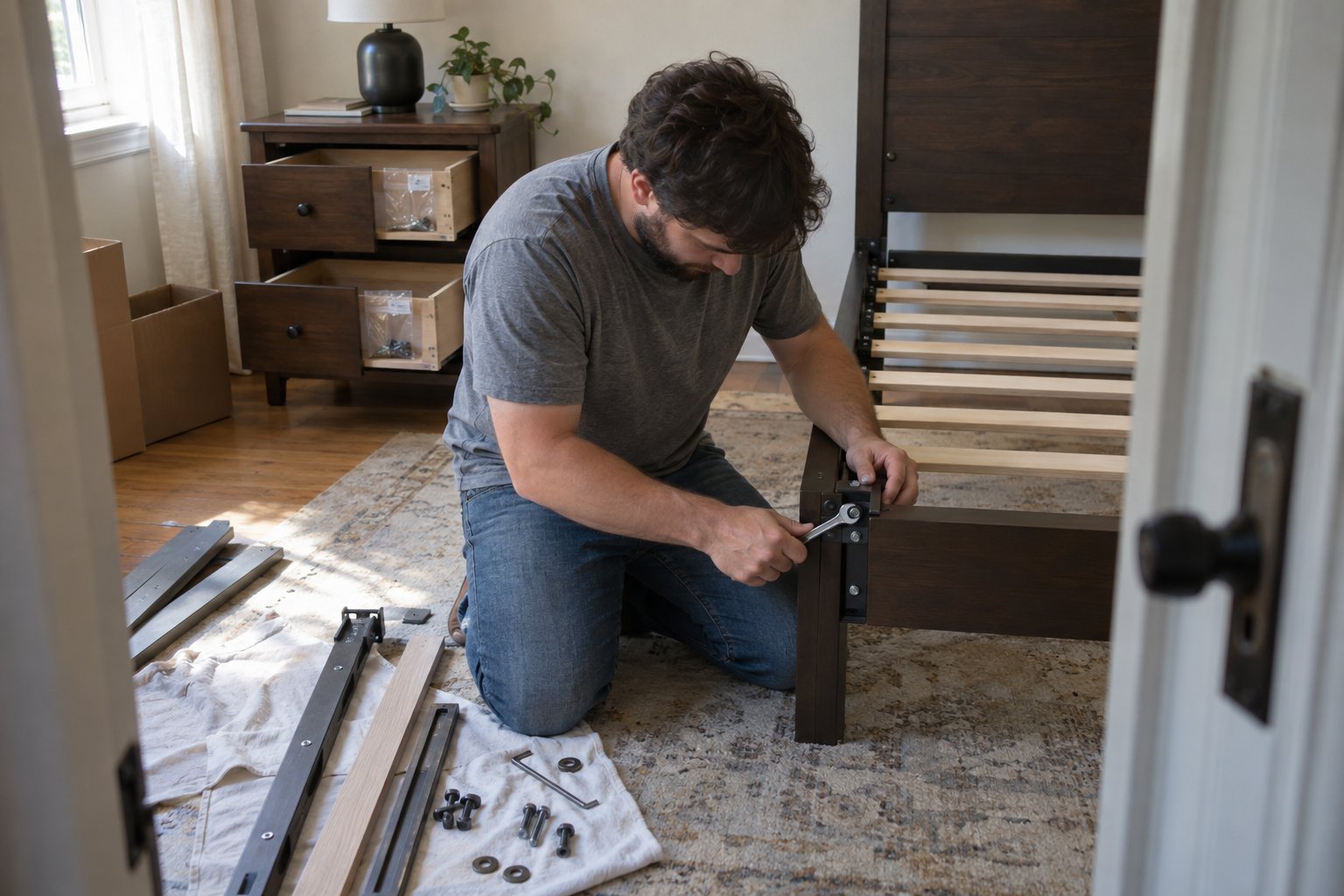
Most furniture disassembly only requires a basic set of hand tools: a Phillips and flathead screwdriver, an adjustable wrench, an Allen key set (most flat-pack and modern furniture uses hex bolts), and a rubber mallet for stubborn joints. A power drill with a screwdriver bit speeds things up considerably on anything with more than a few screws, like bed frames or wardrobes.
Keep a furniture blanket or old towel nearby to lay hardware on so small pieces don't roll under furniture or disappear into carpet. If you're working on an older or antique piece, test screws by hand first. Stripped or seized hardware is common in older furniture, and a drill can snap a screw head that a slower hand turn would have loosened safely.
The single best habit for disassembly is labeling hardware by piece the moment it comes off, not after you've disassembled three different items. Use small zip-top bags, one per piece of furniture, and write the furniture name directly on the bag with a permanent marker.
Tape each labeled bag directly to a flat, non-fragile part of the furniture it belongs to, such as the underside of a tabletop or the inside of a headboard. This way the hardware travels with its piece instead of in a separate box that could end up in a different room, or a different moving truck entirely. For pieces with many small parts, like a crib or a complex bed frame, take a photo of each stage of disassembly on your phone before moving to the next step. It costs nothing and saves real time during reassembly.
Work from the outside in: remove anything that attaches to the main frame first, such as drawers, doors, shelves, and hardware like handles or knobs, before touching structural bolts. This keeps the piece stable and lighter while you're still working on it, rather than loosening the frame while drawers and shelves are still weighing it down.
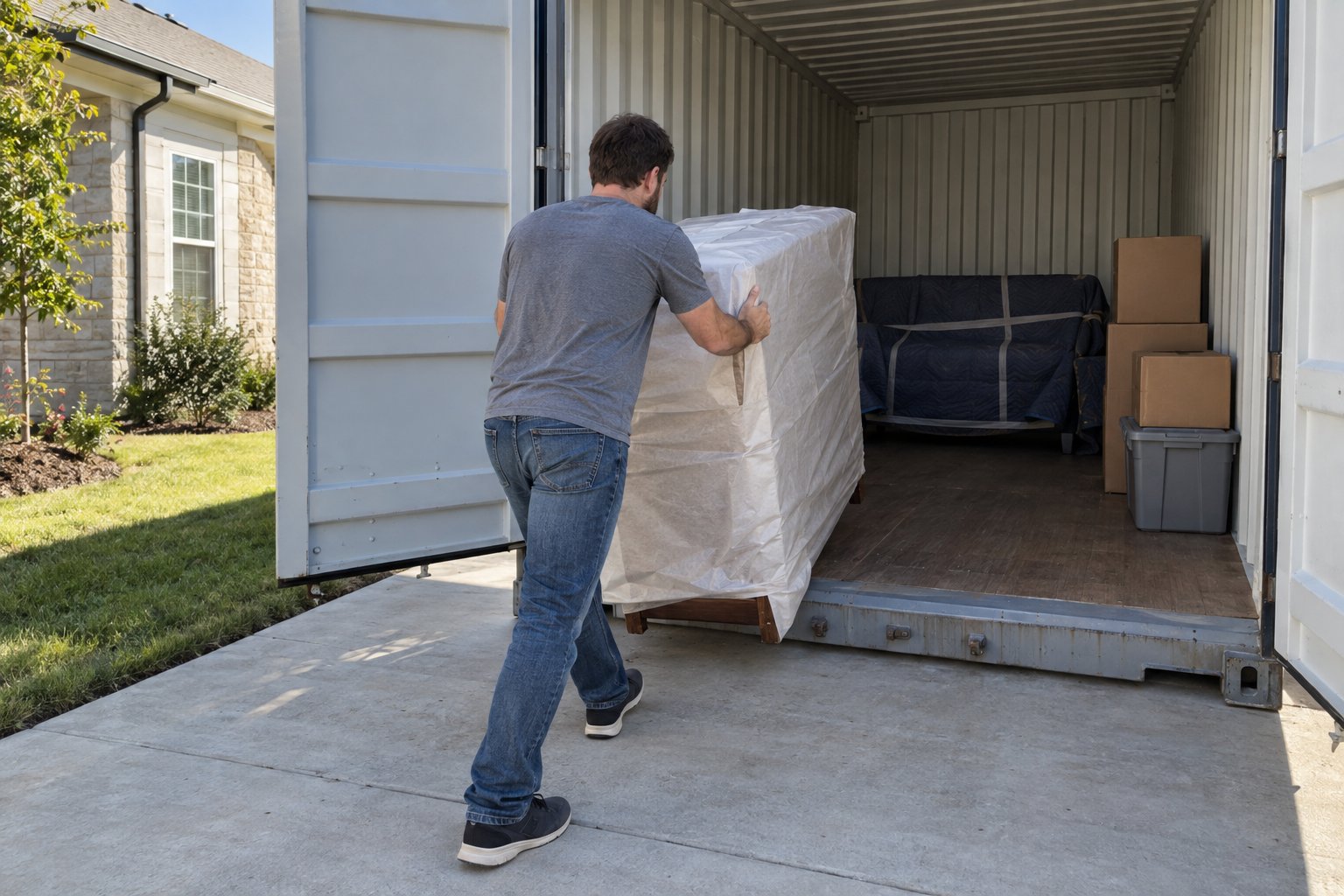
For bed frames specifically, remove the mattress and box spring first, then the headboard and footboard, then the side rails, then the center support beam if there is one. For dining tables, remove the leaves before the legs. For bookcases and wardrobes, take out shelves and doors before disconnecting the frame itself. If a manufacturer's assembly manual is available (even a PDF found online for an older model), following its steps in reverse is usually faster than guessing. If you're packing a POD or portable container rather than a truck, disassembled furniture also stacks far more efficiently, which is worth factoring in if you're following a loading guide for packing a POD alongside this one.
Simple pieces like bed frames, basic bookcases, and dining tables with removable legs are reasonable to disassemble yourself if you have an hour and the right tools. Complex or high-value pieces, antique furniture with fragile joints, or anything you're not confident you can reassemble correctly are better left to professionals who do this daily.
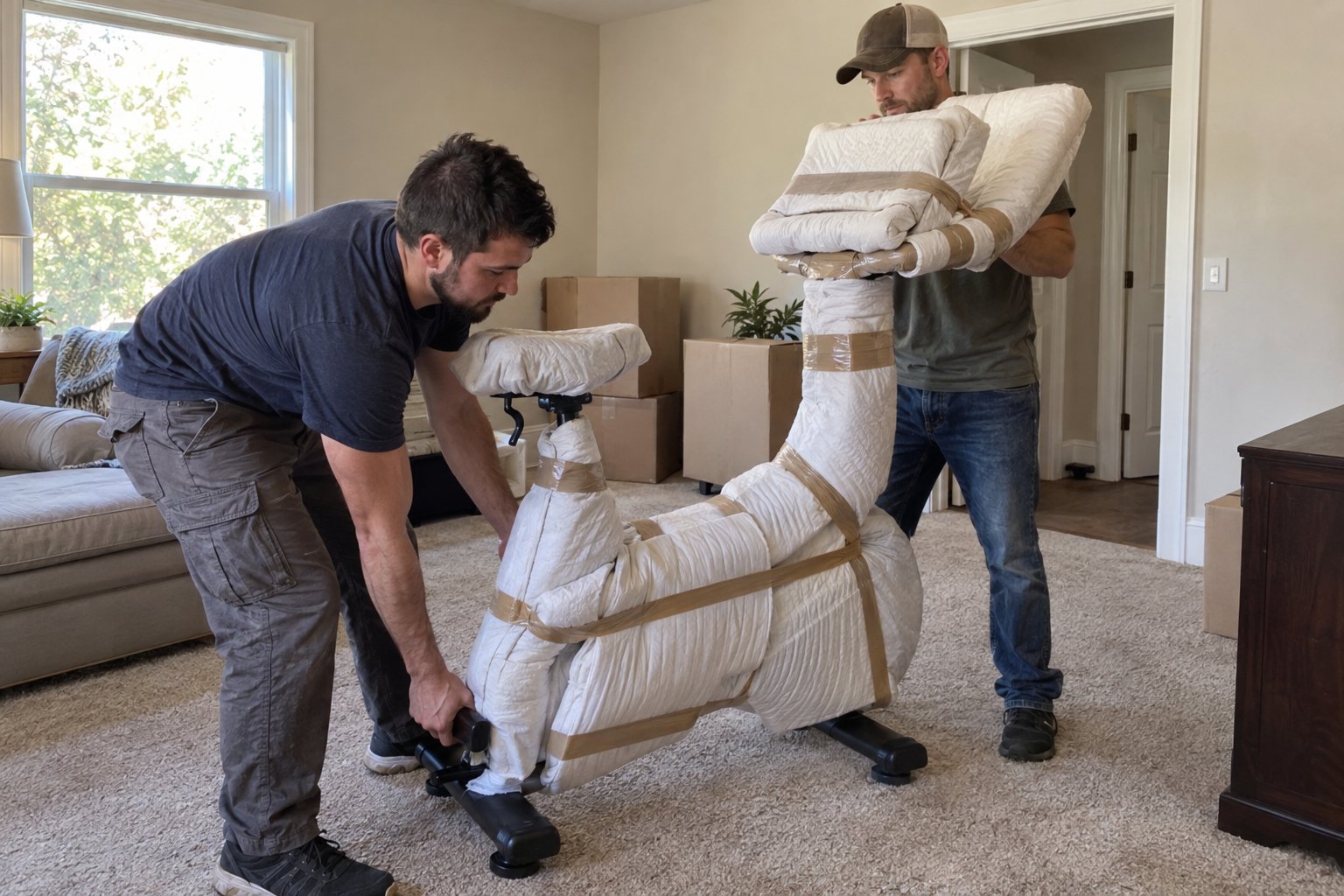
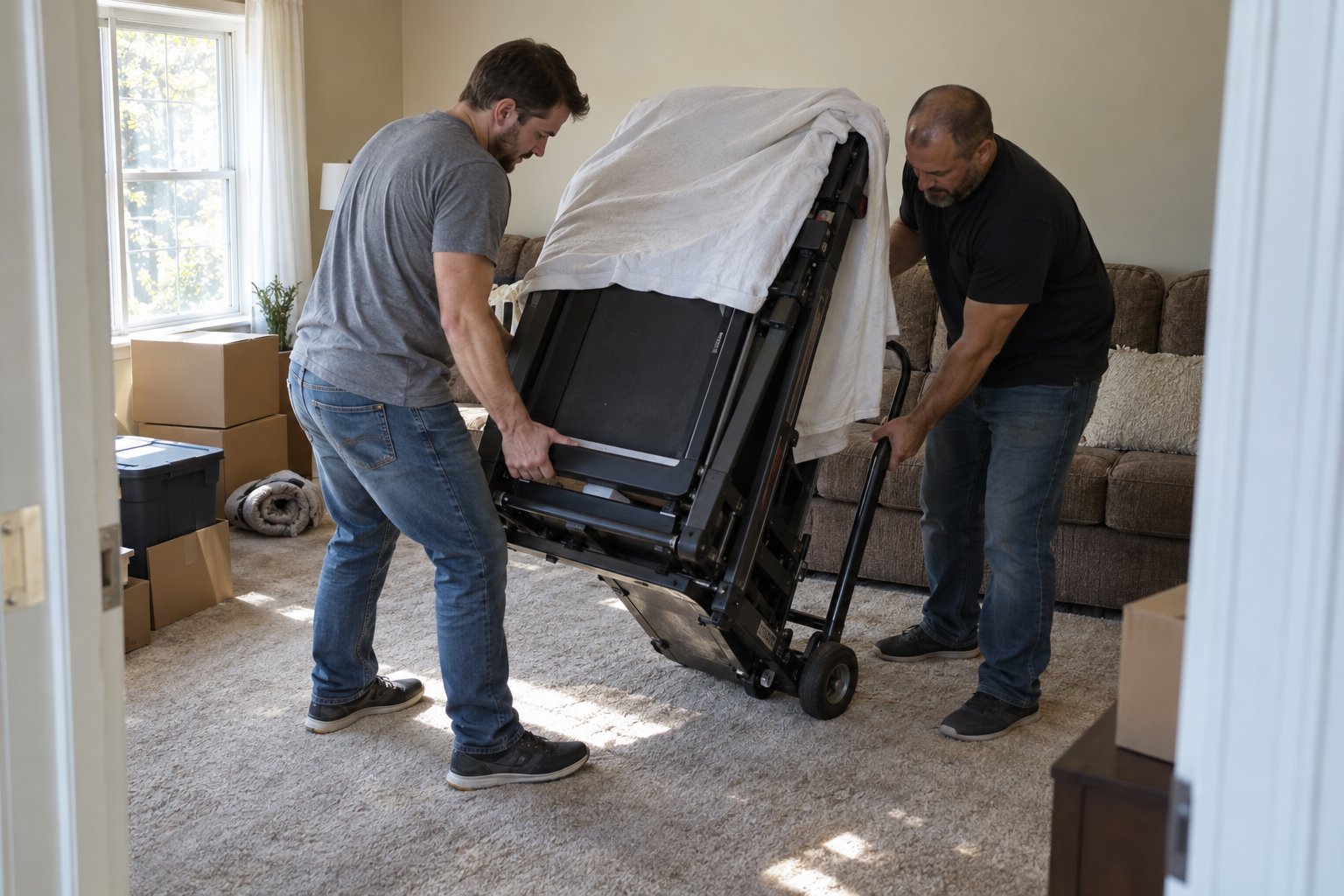
If you'd rather not deal with disassembly at all, that's a normal thing to hand off. Our local moving services include taking apart and reassembling standard furniture like beds and tables as part of the move, so you don't have to track down an Allen key the morning you're supposed to be loading a truck. If you only need help lifting and loading a single oversized piece rather than a full move, our furniture pickup services can handle just that item. Either way, the hardware and reassembly steps stay in hands that do it every week, which matters most for furniture you actually like having back together correctly on the other end.
Reassembly goes smoothly when you reverse your disassembly order exactly and resist the urge to force a joint that isn't lining up. Start with the frame, then add shelves, doors, and drawers last, just as you removed them. If you labeled and bagged hardware by piece, this step should take a fraction of the time disassembly did.
If something doesn't fit the way it did before, stop and check for a part that may have ended up in the wrong bag rather than forcing it. Wood joints in particular can crack under pressure if a bolt is in the wrong hole. Give yourself a little extra time on moving day for reassembly, especially for bed frames, since most families want at least one bed usable the first night in a new home. If disassembly and reassembly are just one item on a longer to-do list, working from a full moving checklist and timeline can help you schedule it alongside everything else that needs to happen that week.
A little planning before moving day protects both your furniture and your sanity once the truck is unloaded. If disassembly isn't something you want to tackle on top of everything else, get a moving quote and ask about furniture takedown and setup as part of your move.
Many moving companies will take apart standard furniture like bed frames and tables as part of a move. Check with your mover ahead of time, since not every company includes this by default, and confirm whether reassembly at the new home is also included.
Put hardware from each piece into its own labeled zip-top bag and tape the bag directly to the furniture it came from. This keeps screws from mixing between pieces or getting lost in a box of miscellaneous items.
It depends on the frame. Platform beds and simple metal frames sometimes fit through standard doorways whole, but most wood bed frames with headboards and footboards need to be disassembled to clear doorways and stairwells without damage.
A standard bed frame takes about 15 to 20 minutes with the right tools. A full bedroom set, including a dresser top mirror, headboard, and bed frame, usually takes under an hour once you've done one or two pieces and have a rhythm going.
Older furniture can have seized or stripped hardware that's easy to damage with a power drill. Test screws by hand first, and if a piece has sentimental or monetary value, it's worth having a professional handle disassembly to avoid cracking aged wood joints.
Long distance moving throughout all of New England and the tristate area (NY, NJ, PA) as well!
From North Branford to communities across Connecticut, CT Family First Movers is here when you need residential, commercial, or long-distance moving services. Request your free quote today.