Written by:
CT Family First Movers
Published:
November 10, 2026
Deciding what to do with an old mattress or sofa before a move? Use this checklist to donate, recycle, or arrange pickup before moving day arrives.
Figuring out what to do with an old sofa or mattress before a move usually comes down to four paths: donate it, recycle it, sell it, or schedule a bulk pickup. The right one depends on condition, timing, and how much lead time you have before moving day. Waiting until the week of your move to decide is the single biggest reason people end up hauling furniture they never wanted in the first place.
This matters more than it seems. An old sofa or mattress takes up truck space, adds to loading time, and if you're paying for moving help by the hour or by the load, it's weight and bulk you may not need to bring along at all. Working through this decision early, ideally a few weeks out, keeps it from becoming a last-minute scramble on top of everything else.
Start with condition. If the piece is clean, structurally sound, and free of stains, tears, or pest issues, donation is usually the best option. If it's worn out, damaged, or simply outdated, recycling or disposal is more realistic, and trying to donate something a charity will reject just wastes a trip.
Selling works best for furniture in good condition that's also in demand, like a well-kept dresser or dining set. Mattresses are harder to sell for hygiene reasons, and many secondhand buyers won't take them regardless of condition.
Most mattresses can't go out with regular trash in one piece, and many municipal programs either ban curbside mattress disposal or charge a separate bulk-item fee. Mattress recycling breaks the piece down into steel springs, foam, and fabric, each of which can be processed separately, which is why dedicated mattress recyclers exist in most areas.
Check with your town's public works department or transfer station before moving day. Some municipalities schedule bulk pickup days, others require you to haul the mattress to a drop-off site yourself, and rules vary enough from one town to the next that it's worth a quick call rather than assuming. The EPA also has general guidance on reducing and recycling household items if you want a broader starting point.
Give yourself at least three to four weeks before moving day to work through this list. Donation pickups often book out, bulk trash days run on a fixed town schedule, and buyers for secondhand furniture don't always respond quickly.
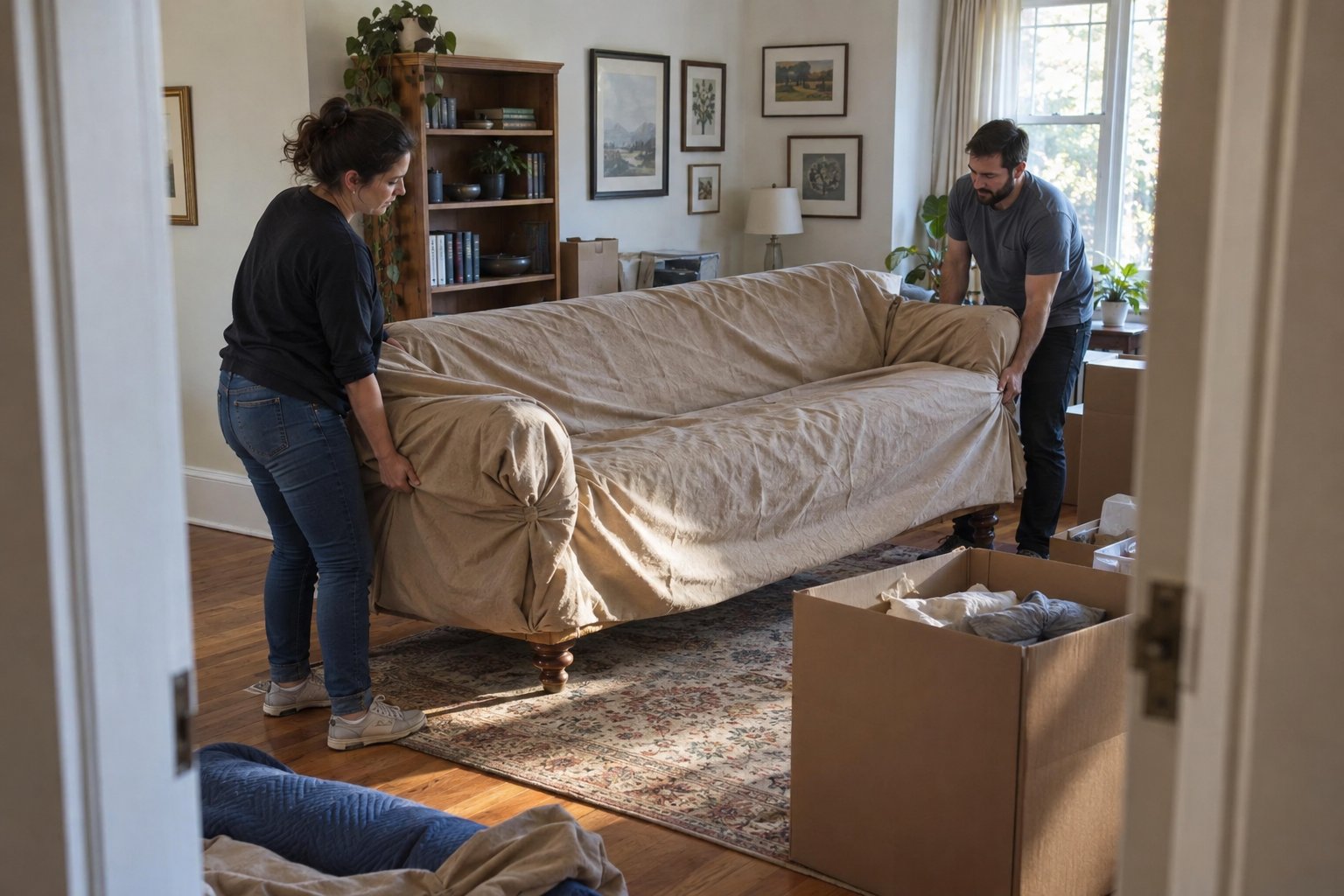
On the day itself, have the item fully separated from what's staying. Move it to a garage, driveway, or curb (checking your town's rules first) so there's no confusion for a donation truck, recycler, or your moving crew about what's going and what's staying behind.
If a charity or recycler is coming the same week as your move, confirm the exact pickup window in advance. A missed donation slot often means the item sits for another week, which can collide directly with your move-out date.
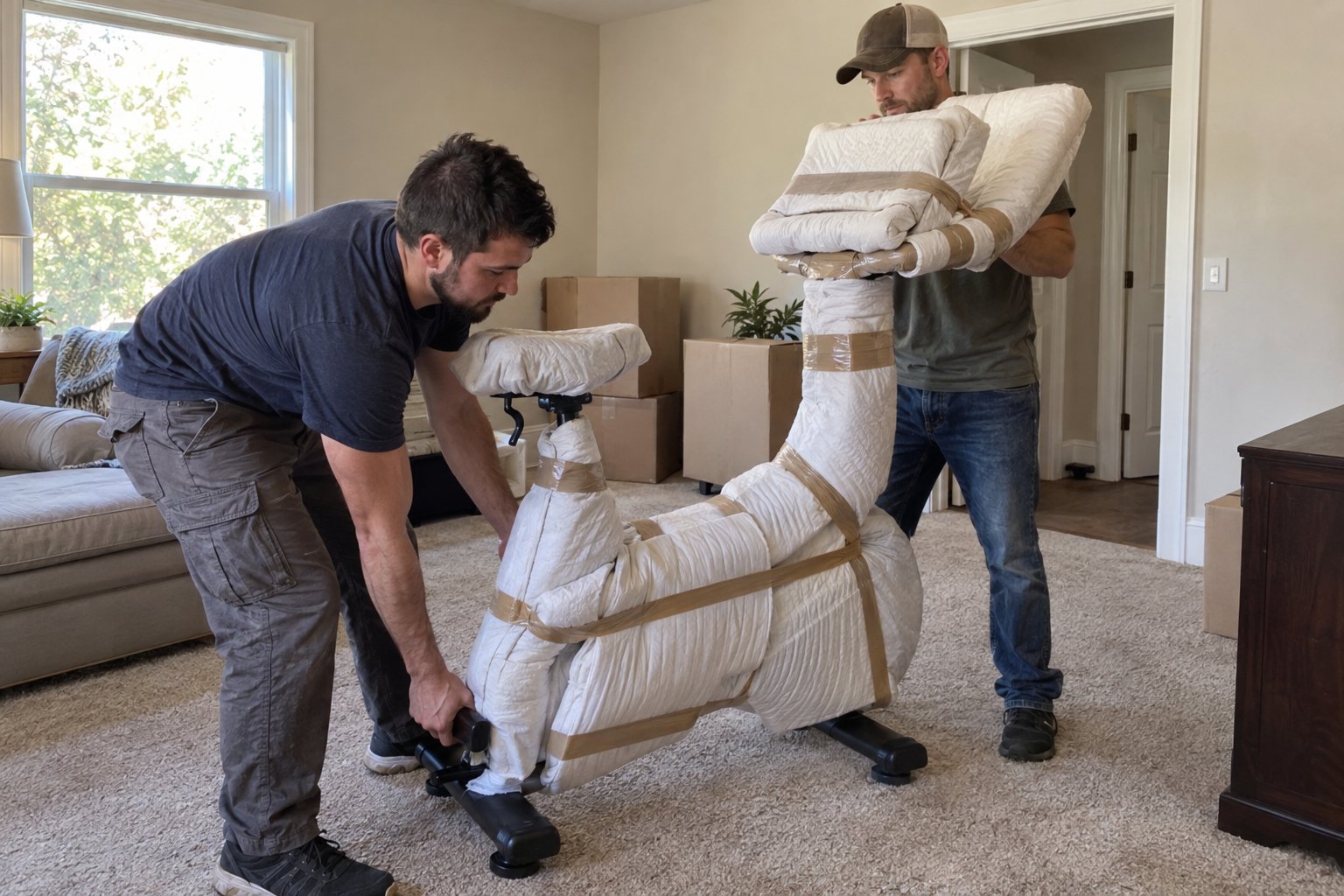
When an entire room's worth of furniture needs to go, it helps to group by destination rather than by room: everything donating in one area, everything recycling in another. This also makes it easier to tell your movers what's staying so nothing earmarked for donation accidentally ends up on the truck. If you're working through a whole household, our guide to downsizing before a move covers how to make those keep-or-go decisions room by room.
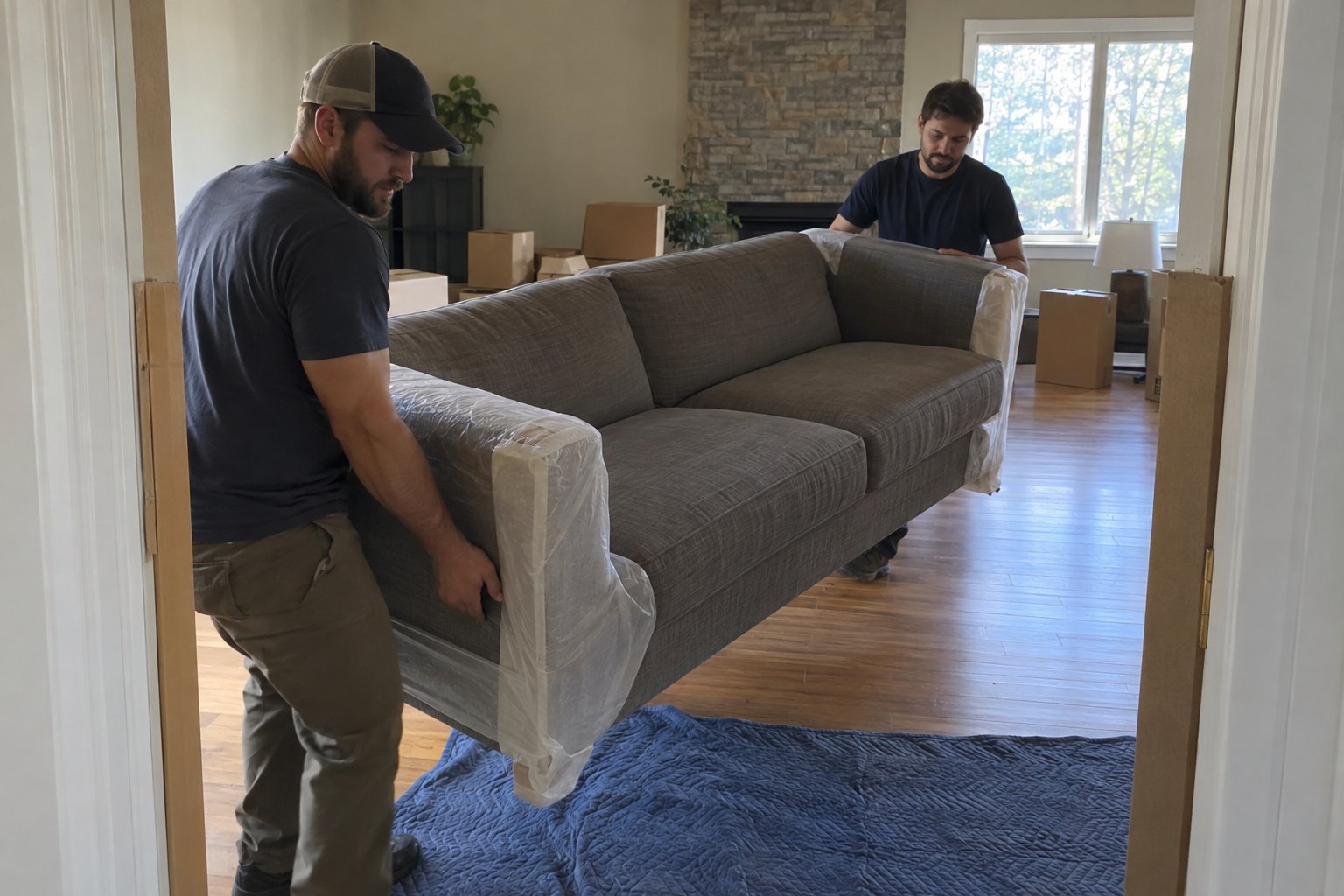
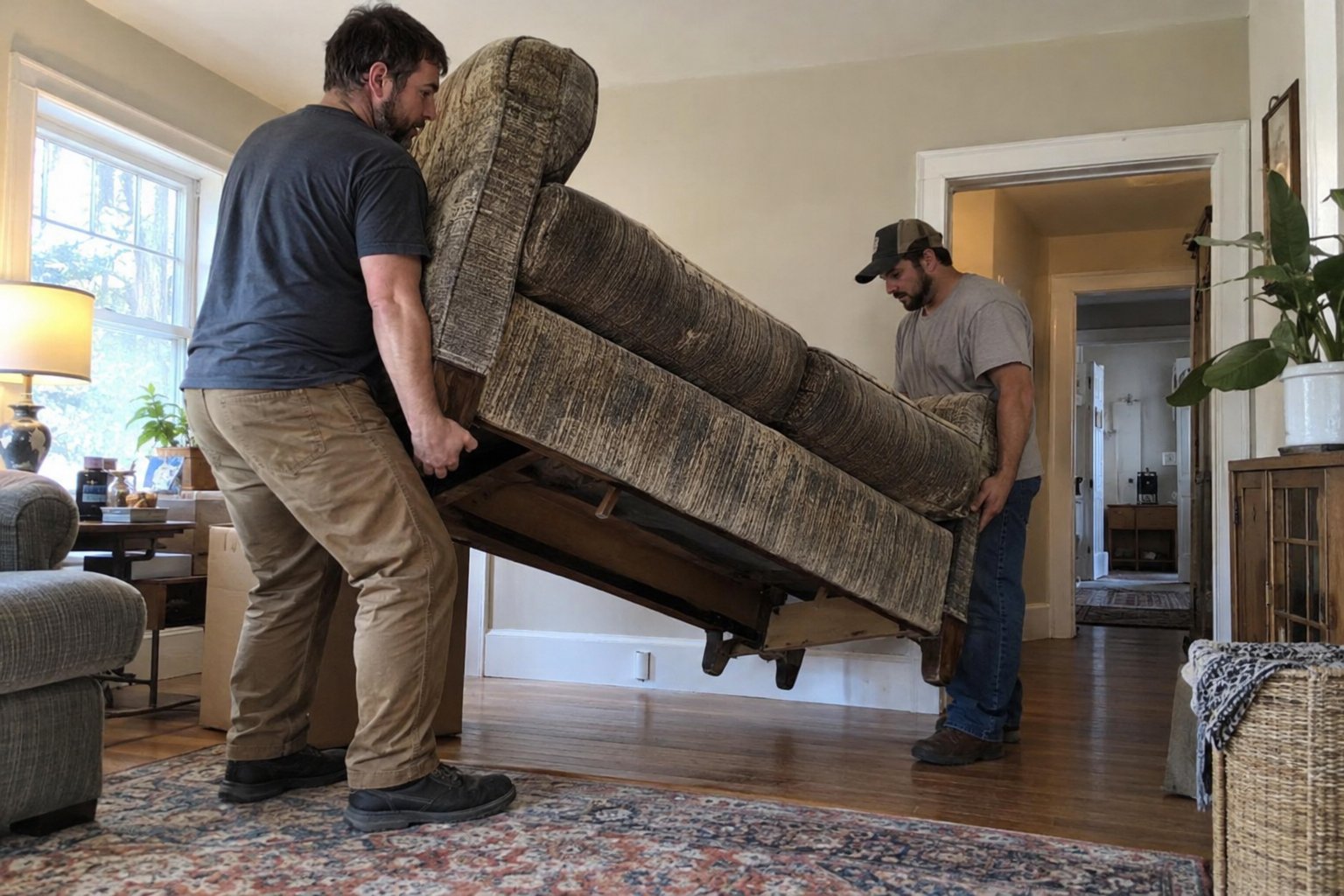
If your move is close and you still have large furniture to clear out, a dedicated pickup service can take it off your hands without you needing to break down a sofa or haul a mattress to a transfer station yourself. Our furniture pickup services are built for exactly this: getting an unwanted piece out of the home before moving day so it's never competing with your actual move for time or truck space.
For larger cleanouts, like multiple rooms of furniture, old appliances, or general household items you're not keeping, a broader junk removal option may make more sense than scheduling several separate pickups.
It matters more for a long-distance move. If you're relocating within the area, it's often simpler to make these decisions close to your move date since donation centers and recyclers are nearby either way. For a long-distance move, where truck space and weight are more tightly planned, it usually makes more sense to clear out anything you're not keeping well before loading day rather than deciding at the curb. If you're weighing those differences more broadly, our breakdown of local vs. long-distance moving walks through how the two are planned differently.
The furniture you're not bringing is often the easiest part of a move to put off, and also the part most likely to cause a last-minute headache if you do. Sorting by destination, booking pickups a few weeks ahead, and confirming your town's rules on bulk items turns this from a moving day scramble into something handled well in advance. Whether you're in Hamden, CT, Guilford, CT, or another nearby town, the planning steps are the same: decide early, book early, and have it gone before the truck arrives.
Planning your move? Request a quote from CT Family First Movers.
Most moving crews are focused on transporting what's going to your new home, not hauling disposal items to a transfer station. It's best to arrange donation, recycling, or bulk pickup separately so the piece is already gone before your movers arrive.
Donation centers generally look for furniture that's clean, free of tears or major stains, and structurally sound. If a piece has pest damage, heavy wear, or broken frames, recycling or disposal is usually the more realistic option.
Aim for two to three weeks before your move if possible. Mattress recyclers and bulk pickup days often run on a set schedule, and booking early helps you avoid a mattress still sitting around the week you're trying to load the truck.
Check with your town's public works department or transfer station, since rules vary by town. Many require a drop-off appointment or a separate bulk-item request rather than leaving a mattress at the curb with regular trash.
Sorting by destination, keep, donate, recycle, or dispose, tends to work better than sorting by room when you're clearing out multiple pieces. It keeps donation items, recycling items, and trash from getting mixed together and makes it easier to tell your movers what's actually staying.
Long distance moving throughout all of New England and the tristate area (NY, NJ, PA) as well!
From North Branford to communities across Connecticut, CT Family First Movers is here when you need residential, commercial, or long-distance moving services. Request your free quote today.